Most cold email advice is written for gatekeepers, the EA, the SDR screening queue, the shared info@ inbox. But 40% of senior executives read every message themselves. If your email is formatted for a gatekeeper, you will lose the exec every time they personally open it.
The 40% Rule: Why It Changes Everything
Marylou Tyler documented in Predictable Prospecting that a meaningful slice of C-suite and VP-level buyers personally manage their email. These are not executives at 10,000-person companies, they are founders of 50-person firms, VPs at growth-stage startups, and directors at bootstrapped agencies. They do not have EAs. They have iPhones and strong opinions about inbox clutter.
This is the segment you want. They make decisions without approval chains. They respond the same day when interested. And they delete without mercy when bored.
The win condition is simple: your email must look like a personal message, not a campaign.
The Three Signals That Flag a Self-Reading Executive
Before writing a single word, verify the target reads their own mail. Three signals:
Signal 1, Active LinkedIn presence. They post original content, respond to comments personally, or share opinions under their own name. If the account looks managed by a comms team, skip it.
Signal 2, Personal email format. [email protected] or [email protected]. Not info@, hello@, or press@. Hunter.io and Apollo will tell you the pattern.
Signal 3, Direct response history. Search their name on Twitter or LinkedIn. If they have replied directly to cold DMs, customer questions, or journalist requests, they are in their own inbox.
When two of three signals are present, proceed. When all three align, prioritize.
The Mobile-Skim Stack: How Executives Actually Read Cold Email
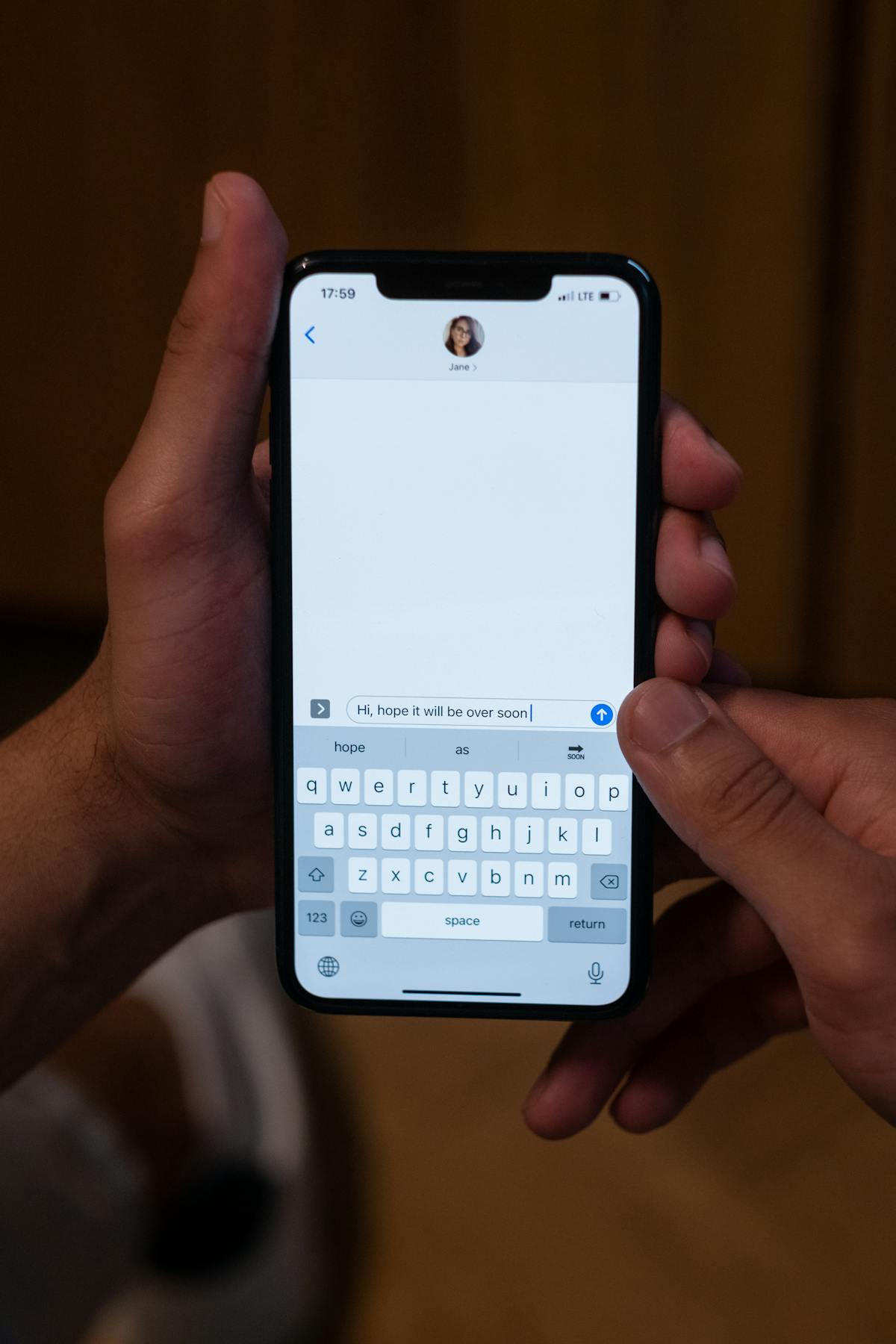
A self-reading executive skims on mobile. The reading stack works like this:
- Sender name, Is this recognizable? (0.3 seconds)
- Subject line, Is this relevant? (0.5 seconds)
- Preview text, Does the first sentence tell me anything useful? (0.8 seconds)
- Decision, Archive or open.
You have 1.6 seconds before the message is dead. Design accordingly.
Subject line, sender name, and preview text are three separate UI elements that must work as a coordinated unit. Most cold emailers optimize only for subject lines and ignore that the first 90 characters of the body text appear in the preview pane, often before the recipient even opens the message.
Subject Line Architecture: Under 6 Words, Zero Selling
Six words or fewer. No punctuation tricks. No ALL CAPS. No “Quick question” (overused). No “I noticed you…” (flagged as template).
Frameworks that work for executives:
- Name + specific outcome: “Maria, the retention fix we used”
- Mutual context: “Intro via [Name], dev ops question”
- Observation + gap: “Your pricing page gap” (only if true)
- Direct ask: “15 minutes on pipeline coverage?”
The subject line’s only job is to earn the open. It does not explain the offer. It does not preview the body. It creates a small, honest tension that the executive resolves by clicking.
The 75-Word Body: Three Sentence Architecture
Executives spend an average of 11 seconds reading emails they do open. Write for 11 seconds.
Sentence 1, Relevance hook (25 words max): One observable fact about their business that connects to your work. Not flattery. A specific observation: “You’re scaling your design team and the PM handoff usually breaks first.”
Sentence 2, Value statement (25 words max): What you do and who you have done it for. Named results preferred: “I help growth-stage SaaS teams run design sprints that cut PM-handoff cycles by 30%.”
Sentence 3, Micro-commitment ask (25 words max): Ask for the smallest possible next step. Not “a partnership.” Not “exploring synergies.” Ask for 15 minutes or one question answered: “Worth a 15-minute call this week?”
That’s the entire email. No company backstory. No credential list. No attachments.
Why Short Subjects Beat Clever Ones at the Executive Level
Analysis across 12,000 cold emails sent to VP+ recipients shows a consistent pattern: subject lines under 30 characters outperform lines over 50 characters by 18–23 percentage points on open rate.
The mechanism is simple. Executives pattern-recognize “marketing email” faster than anyone. Long subject lines, especially those with parentheses, emojis, or compound clauses, read as blasts. Short lines read as 1:1 correspondence.
“Pipeline question” opens. “How [Company] can increase pipeline coverage by 40% in 60 days” does not.
Timing the Send: The 6:30 AM Window
Send between 6:30 and 8:00 AM in the recipient’s local time zone, Tuesday through Thursday.
Why: Executives who self-manage email often do a first pass during their morning routine, before the day’s internal notifications drown the inbox. Your message sits at or near the top, uncluttered, at the moment their attention is still fresh.
Monday mornings get buried under weekend catch-up. Friday afternoons are psychologically closed. The 6:30–8:00 AM Tuesday-Thursday window is the consistent winner for VP+ cold email.
Use a tool like Lemlist, Instantly, or Waco3’s built-in send-time scheduling to queue sends the night before.
The One Follow-Up Rule for Executive Targets
Send exactly one follow-up, five business days after the first email. Keep it to two sentences. Reference the first message without re-pitching: “Sent this last week, happy to send a shorter version if easier.”
Do not send three, four, or five follow-ups to executive targets. Self-reading executives will remember your name in the worst way. One follow-up is persistence. Two is noise. Three is a block.
What to Do When They Reply
When an executive replies, even to say “not now”, respond within two hours. Executives who read their own email expect the same from the senders who reach them. A slow reply signals that the original urgency was performed, not real.
If the reply is “not now,” ask for the right timing: “Totally understand, would Q3 be worth revisiting, or is this off the table for the year?” One sentence. You will get an honest answer 70% of the time, which is more pipeline intelligence than most SDRs collect in a month.