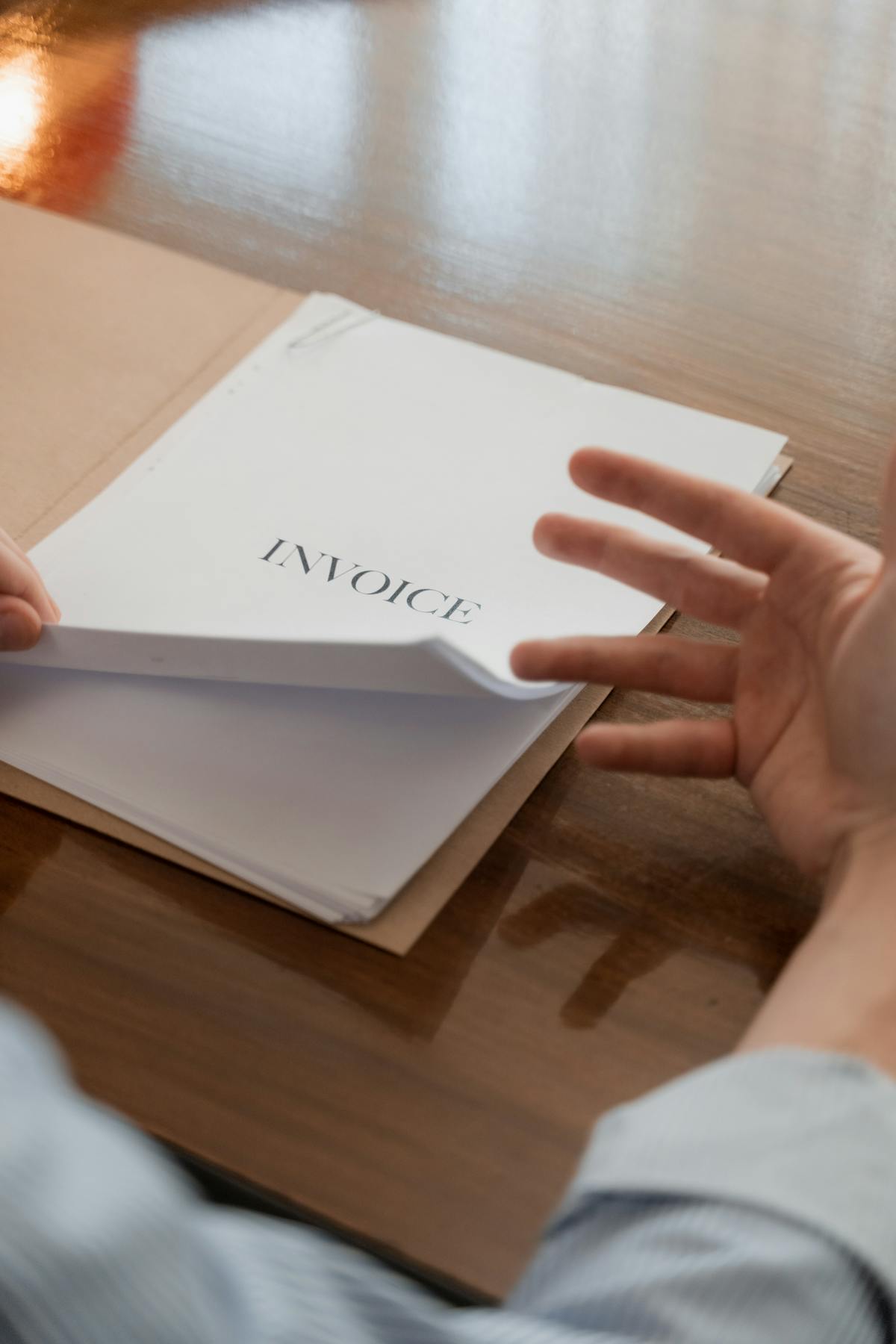
Invoice numbering sounds like a tiny detail. It is not. Tax authorities care a lot. Clients notice when numbers look weird. And your own ability to find an invoice from three years ago depends on it.
Honestly, this is the boring kind of setup that pays off years later when someone asks for invoice 1042 and you find it in 30 seconds. Set it up once and it runs forever.
What an invoice number is actually for
An invoice number serves three audiences:
- Tax authorities, who use sequential numbering as a control against off-the-books transactions
- Clients, who reference the number in their AP systems
- You, who need to find a specific invoice quickly when questions arise
Each audience wants the same thing: unique, sequential, no gaps, easy to search.
The two formats that work
Format 1: pure sequential
1042, 1043, 1044, 1045…
Pros: simplest possible. No format changes year over year. Cons: hard to scan visually for “which year was this.” Larger numbers feel impersonal.
Format 2: year-prefixed sequential
2026-0042, 2026-0043, 2026-0044… (resets each January to 2027-0001)
Pros: instant visual grouping by year. Easier filing. Easier search. Cons: technically two sequences (one per year), most tax authorities accept this, but check your local rules.
Both formats hold up under audit. Pick one based on preference. The choice matters far less than picking one and sticking to it.
What not to do
Patterns that cause problems:
- Custom prefixes per client (Client A: A-001, Client B: B-001), creates multiple sequences with confusing overlaps
- Skipped numbers because an invoice “felt wrong”, gaps look like missing invoices to an auditor
- Restarting numbering each year without a clear year-based prefix
- Random or descriptive numbers (Project-Cool-Site-v2), no sequence, no audit trail
- Reusing voided numbers, creates two invoices with the same identifier in your records
Avoid all of these. The invoice numbering system that holds up under scrutiny is boring on purpose.
Why starting at 001 is a mistake
A first-ever invoice numbered 001 broadcasts that you are brand new. Clients sometimes use that signal to push for discounts, longer payment terms, or skipping deposits.
Start at a number that suggests you have been doing this for a while. Common starting points:
- 1001 (looks established without being absurd)
- 1042 (random-feeling four-digit)
- 2026-0001 if using year prefix (more honest, but the year prefix carries the legitimacy)
The number itself does not have to mean anything. It just has to look like part of a sequence that has been running.
Handling voids and cancellations
Sometimes an invoice needs to be canceled. Maybe it had a wrong amount, maybe the client situation changed before sending.
Right way:
- Keep the invoice number in the sequence
- Mark it CANCELLED with date and reason
- Reference the cancellation in any replacement invoice
- Do not delete from your records
Wrong way:
- Delete the invoice and reuse the number for the next one
- Skip the number and start the next invoice at the following one without explanation
- Renumber to fill the gap
An audit-ready system tracks every voided number. The clean-looking system that hides them creates exactly the gaps that prompt deeper review.
Separate sequences for related documents
Three document types, three sequences:
| Document | Format | Example |
|---|---|---|
| Invoice | INV-2026-0042 or 1042 | Main billing |
| Credit note | CN-2026-0007 | Refund or adjustment |
| Receipt | R-2026-0118 | Payment confirmation |
Some freelancers run all three as one unified sequence with prefixes (INV-2026-0042, CN-2026-0043, R-2026-0044). That works but makes year-end reporting harder because you cannot just count INV records.
Separate sequences with cross-references is more flexible. Pick the approach that fits your reporting needs.
How tools handle this automatically
Modern invoicing tools should:
- Auto-increment the invoice number
- Lock the format you set
- Generate receipts with their own sequence when payment is marked
- Track voided numbers in a visible log
- Export full sequence reports for tax filing
If your current tool does not do these, the numbering is going to drift sooner or later. Pick a tool that handles numbering automatically and removes the human-error step.
What auditors look for
If a tax authority audits your invoicing, common checks:
- Is the sequence unbroken across all issued invoices?
- Are voided numbers accounted for with documentation?
- Does each invoice number match the bank deposit or receipt?
- Are credit notes properly referenced to their original invoices?
- Are all invoices issued from the same legal entity using the same sequence?
A clean invoice numbering system answers all of these in minutes. A messy one turns the audit into a multi-week archaeology project.
Migrating from an old system
If your existing numbering is a mess (mixed formats, gaps, restarts), do not try to renumber the past. Instead:
- Pick the format you will use going forward
- Pick a starting number that does not overlap with any past invoice
- Document the transition (Past invoices used various formats; from invoice 2000 onward, format is 2026-XXXX)
- Keep old records as they were
Trying to retroactively fix old invoices creates more confusion than it solves. Fix forward only.
The international wrinkle
Some countries (Mexico, Argentina, Chile, Brazil, and others) require government-issued electronic invoice numbers that integrate with their tax authority systems. In those jurisdictions:
- Your local invoice numbering is in addition to the government number
- Both numbers appear on the invoice
- Cross-border clients usually need both
If you bill internationally, check whether your local jurisdiction requires electronic invoices for B2B services. The setup adds complexity but is non-negotiable in those markets.
How long to keep invoices
Tax authority retention requirements vary, but common minimums:
- 4 years (US federal)
- 6 years (UK)
- 5 to 10 years (many EU countries)
- 7 years (Canada, Australia)
Default to 7 years across all invoices, kept in both digital and backup form. Storage is cheap. Lost invoices in an audit are expensive.
The numbering system in one paragraph
A clean invoice number format: year-prefixed sequential (2026-0042), starting at a four-digit number, no gaps, voids marked in place, separate sequences for receipts and credit notes, automated by your billing tool. Set it up once. Never think about it again. Years later, when an audit or a client question lands, you can pull any document in 30 seconds.
The numbering system that keeps you audit-ready is not complicated. It is just disciplined. The boring, consistent setup beats the clever, customized one every time.
Ready to send stronger proposals?
Build, send, and track proposals in one place so follow-up is easier.
Start your free trial →