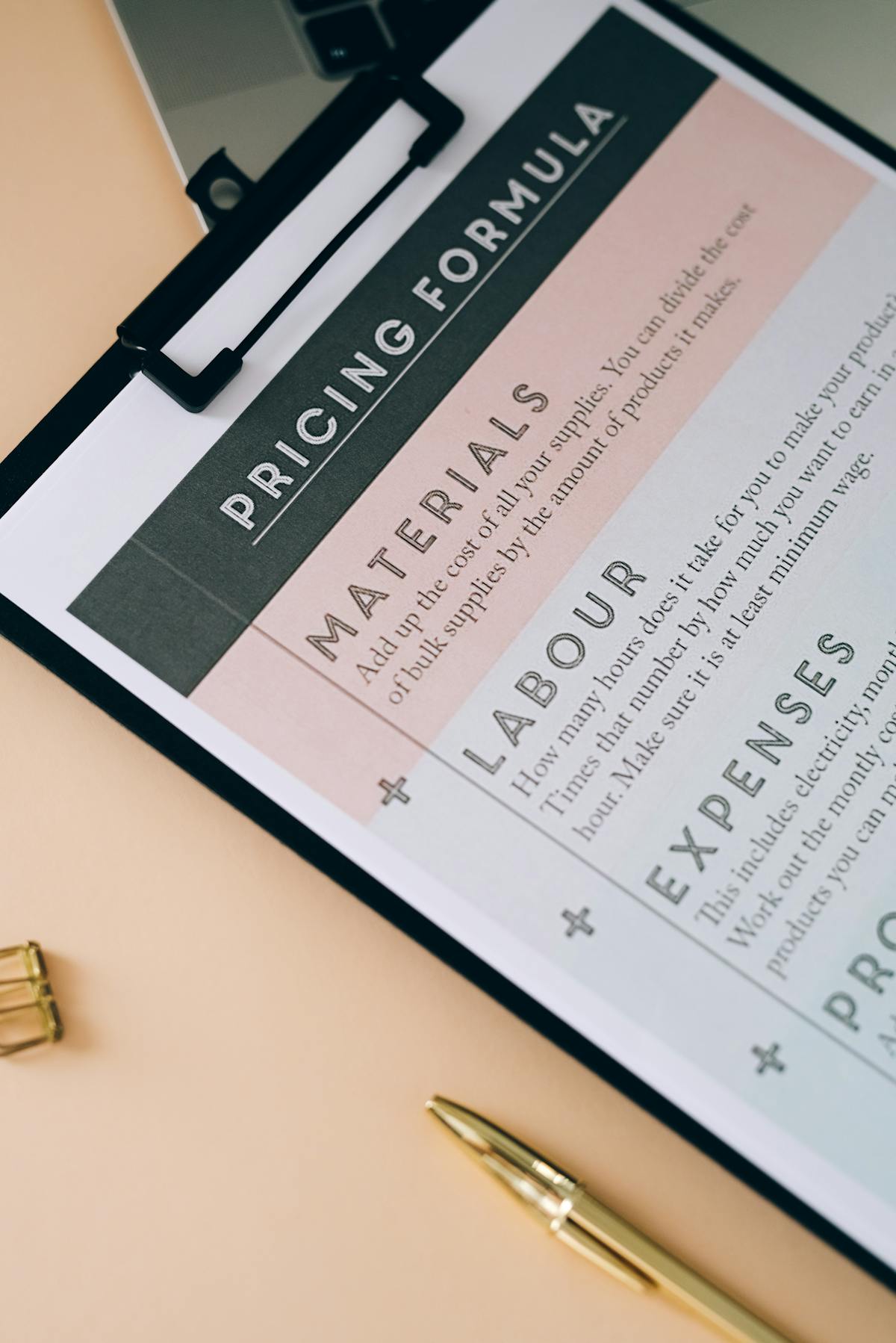
You did the math. You figured out your hourly rate, multiplied it by the hours you thought you’d bill, and landed on a number that looked fine on paper. Six months later, the number doesn’t feel right, you’re working hard, invoicing regularly, but the money isn’t there. The problem isn’t your work ethic or your client pipeline. The problem is that your pricing model left out the costs that don’t show up on your invoice: the ones you pay for yourself.
The Four Invisible Costs
Before you can build a full-cost model, you need to identify what traditional freelance pricing calculators miss. There are four major categories:
Benefits gap. A salaried employee earning $80,000 typically receives health insurance, paid vacation, paid sick days, and sometimes dental, vision, and a retirement match, worth $15,000–$25,000 in additional compensation per year. As a freelancer, every cent of that comes from your rate.
Self-employment tax. Employees pay 7.65% of FICA taxes; employers pay the other 7.65%. Freelancers pay both halves: 15.3% on net self-employment income up to the Social Security wage base. On $100,000 of net income, that’s $15,300 before income tax.
Unbillable time. Every hour spent on proposals, invoicing, client calls, marketing, and professional development is an hour you are not billing. Most freelancers undercount this by 50%.
Business overhead. Software subscriptions, accounting, professional development, equipment, and liability insurance add up to $3,000–$8,000 per year for most solo operators.
Step 1: Build Your True Annual Target
Start with the take-home you want. Not gross income, actual post-tax money in your pocket. Call this your Personal Draw.
Add back estimated income tax (use your marginal rate as a proxy, typically 22–32% for most US freelancers). Add back self-employment tax (15.3% on net income, you can deduct half, so effective rate is roughly 13%). Add health insurance for 12 months. Add retirement contributions at 15% of net income. Add business overhead.
That total is your Gross Revenue Requirement, what your freelance business needs to generate before you pay yourself.
Most freelancers who run this calculation for the first time discover their Gross Revenue Requirement is 40–60% higher than what they’re currently earning. That gap explains chronic cash flow stress.
Step 2: Calculate Your Real Billable Hours
Take 52 weeks. Subtract:
- 2 weeks vacation
- 1 week holidays
- 1 week illness buffer
You’re left with 48 working weeks at 40 hours each: 1,920 raw hours.
Now subtract unbillable time. A realistic breakdown for a solo operator:
- Business development and proposals: 5 hours/week
- Admin, invoicing, email management: 3 hours/week
- Professional development: 2 hours/week
That’s 480 unbillable hours per year. Your real billable capacity: 1,440 hours.
If you have been calculating rates using 1,900 or 2,000 hours as your base, you have been systematically undercharging by 25–30%.
Step 3: Derive Your Minimum Viable Rate
Divide your Gross Revenue Requirement by your real billable hours.
Example: A freelancer targeting $85,000 take-home, in a 28% tax bracket, with health insurance at $550/month, retirement at 15%, and $5,000 in annual overhead:
- Personal Draw: $85,000
- Income + SE tax: $38,200
- Health insurance: $6,600
- Retirement: $17,700 (15% of $118,000 net)
- Overhead: $5,000
- Gross Revenue Requirement: $152,500
Divided by 1,440 billable hours: $105.90/hour minimum viable rate.
If that freelancer is charging $75/hour and wondering why they can’t get ahead, the math explains everything.
Step 4: Add the Profit Layer
The Minimum Viable Rate is your floor, what you need to break even on life. Your actual target rate should add a profit margin of 15–25% above that floor.
Profit in a solo business is not greed. It is the reserve that:
- Absorbs slow months without panic
- Funds equipment upgrades without debt
- Allows you to take risks (turn down a bad client, take a strategic project at lower pay)
- Builds the savings buffer that makes you confident in your pricing
At a 20% profit margin, the $105.90 floor becomes a $127/hour target rate. Round to $125–$130 for ease of conversation.
Your Minimum Viable Rate is survival math. Adding 20% profit margin is sustainability math. Both are required before your pricing is actually working for you.
Step 5: The Salary Parity Sanity Check
Run your rate through a final sanity check: does it produce freelance income that is competitive with what you’d earn as an employee doing equivalent work?
If a salaried position for your work pays $90,000/year ($43.27/hour), your equivalent freelance rate needs to be 2.2–2.5x that to account for benefits, taxes, and overhead. That puts the Salary Parity Number at $95–$108/hour.
If your full-cost model rate is at or above the Salary Parity Number, you’ve passed the check. If your full-cost model produces a rate below the Salary Parity Number, you have a positioning problem, not a math problem. Your rate is too high relative to your market, which means you need to either reposition upmarket or significantly reduce overhead.
The Annual Recalculation Habit
Run the full-cost model once per year, at minimum. Why it changes annually:
- Health insurance premiums increase (average 5–8% per year)
- Tax brackets shift
- Overhead grows as you invest in better tools
- Your income target should grow over time
Most freelancers set a rate in year one and adjust it only when a client pushes back. The full-cost model is the alternative: a systematic review that raises rates proactively, based on real numbers, not discomfort.
The result, over five years, is a rate that compounds upward on a schedule you control, rather than creeping upward only when financial stress forces the conversation.