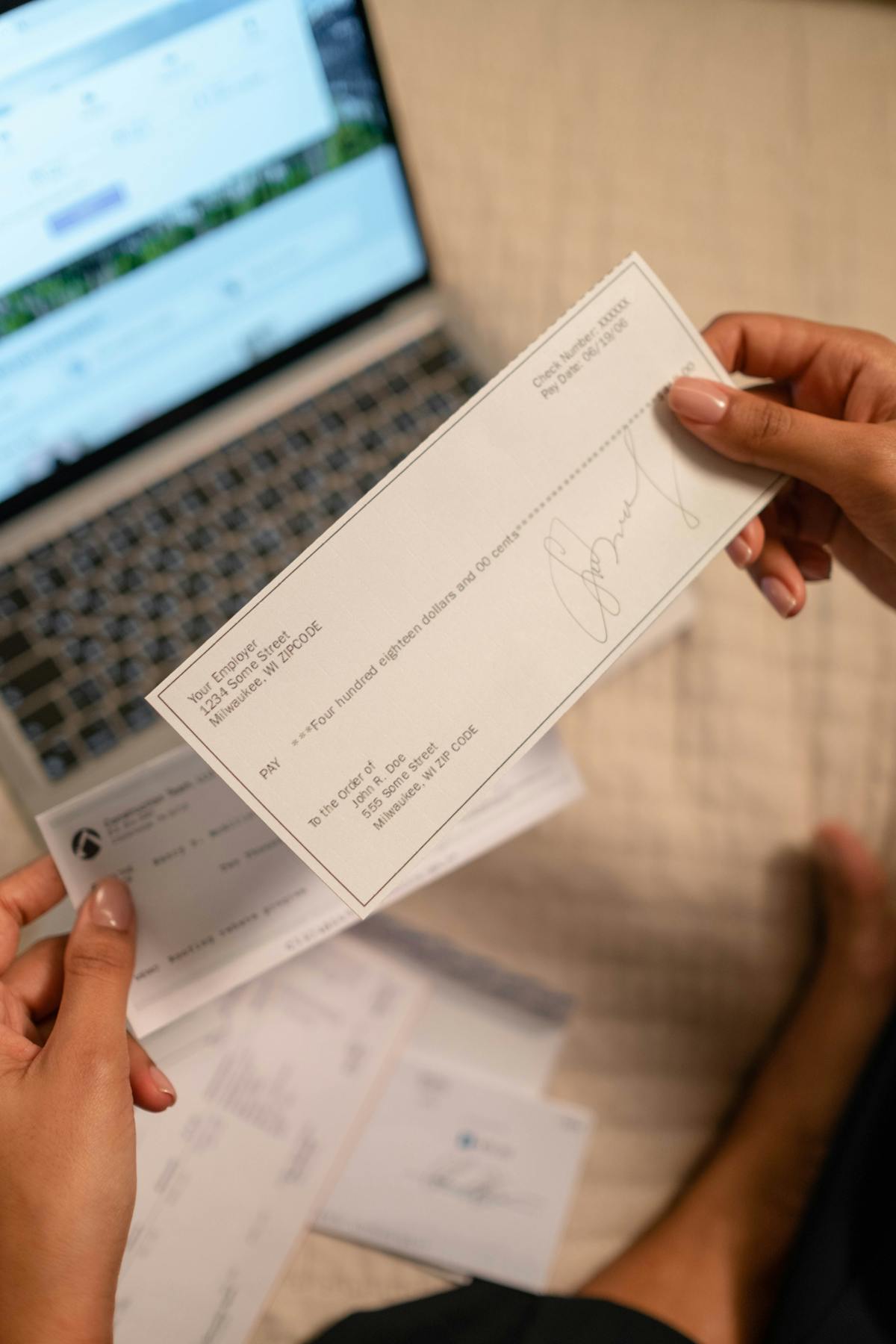
Employees get paychecks. Contractors send invoices. That one difference means you’re now responsible for triggering your own payment — and doing it in a way that looks professional, creates a paper trail, and holds up legally if something goes wrong. Here’s exactly how to write an invoice for contract work.
Contract invoicing trips up a lot of first-time freelancers and independent contractors. The format looks simple, but getting the details wrong — missing your tax ID, skipping the invoice number, forgetting payment terms — creates friction, delays payment, and can cause tax headaches later. This guide covers the format, the fields, and the edge cases.
Employee vs. contractor invoices: the core difference
When you work as an employee, your employer withholds federal and state taxes, Social Security, and Medicare from your paycheck before it ever reaches you. You get a W-2 at year end.
When you work as a contractor, the client pays you the full invoiced amount with no withholding. You handle your own taxes — including self-employment tax (15.3% on net earnings). You get a 1099-NEC from any client who paid you $600+ in a calendar year.
This means your invoice is a legal document that initiates a business transaction between two parties. It needs to be accurate, complete, and professional.
Required fields on a contractor invoice
Every invoice for contract work needs these elements:
Your business information
- Business name (or your full name if operating as a sole proprietor)
- Business address
- Email address
- Phone number
- EIN (Employer Identification Number) or Social Security Number — some contractors prefer to provide this separately for security
Client information
- Client’s full legal name or business name
- Billing address
- Contact name (for the accounts payable person)
Invoice identification
- Invoice number (unique, sequential — e.g., INV-2026-047)
- Invoice date (the date you’re issuing the invoice)
- Due date (e.g., “Due by May 23, 2026” or “Net 15” from invoice date)
Service details
- Description of services rendered
- Period of service (date range or project phase)
- Quantity (hours, days, or unit count)
- Rate (hourly, daily, or project rate)
- Line total per item
Totals
- Subtotal
- Any applicable sales tax (most freelance services aren’t taxable, but check your state)
- Total amount due
Payment instructions
- Accepted payment methods
- Bank transfer details, payment link, or check payee name
- Any late fee policy
One field freelancers often skip: the invoice number. It seems bureaucratic, but it’s essential for your accounting records and for resolving disputes. If a client says “I don’t have an invoice from you,” you can reference a specific number and date. Start with INV-001 or INV-2026-001 and increment from there.
How to write the service description
The service description is the part that gets disputed most often. Vague descriptions create confusion. Specific ones don’t.
Bad: “Consulting services — $5,000”
Good: “Website copywriting (Pages: Home, About, Services, Contact) — 8 pages @ $625/page = $5,000. Delivered May 1–15, 2026 per contract dated April 20, 2026.”
Include:
- What you delivered (not just “services” or “work”)
- When you delivered it
- A reference to the contract or project agreement
- If hourly: the hours worked and the rate
This level of detail protects you if the client ever disputes the invoice and makes the accounts payable process easier on their end.
Milestone billing for contract work
Long projects often pay better when billed in milestones rather than one lump sum at the end. Milestone billing improves your cash flow and reduces the risk of non-payment at project completion.
Structure milestone invoices like this:
Invoice header: Include “Milestone 2 of 3” or “Phase 2 completion” in the invoice title or description field.
Reference the contract: “Per contract signed [date], the following milestone has been completed:”
List what was delivered: Don’t just say “Milestone 2 complete.” Name the deliverable — “Phase 2: Database architecture and API integration, delivered May 8, 2026.”
Show project totals (optional): Many contractors include a footer showing total project value, amount invoiced to date, and remaining balance. This keeps the client oriented in the project’s financial picture.
Example milestone invoice breakdown:
- Project total: $12,000
- Milestone 1 (invoiced April 1, paid): $4,000
- Milestone 2 (this invoice): $4,000
- Milestone 3 (due at project completion): $4,000
Project completion invoices
A project completion invoice is the final invoice for a fixed-price project. It should:
- Reference the original contract and any amendments
- Confirm the project is complete (“All deliverables per contract dated [date] have been provided”)
- Show any previously invoiced amounts if you’re billing incrementally
- State the final amount due clearly
- Include a clear due date — clients sometimes treat final invoices as optional; a firm due date removes that ambiguity
If you’ve held a deposit, reference it here: “Less deposit received April 1, 2026: ($2,000)” and show the balance due.
Payment terms for contract work
Standard terms for contractor invoices:
- Net 15: Due 15 days from invoice date. Good for smaller projects or ongoing work.
- Net 30: Due 30 days from invoice date. Common in corporate environments.
- Due on receipt: Immediate payment. Use for smaller amounts or established clients.
- 50/50: 50% deposit upfront, 50% on completion. Reduces your risk on new clients.
Whatever you put in the contract, mirror exactly on the invoice. Discrepancies between the two cause unnecessary back-and-forth.
Late payment fees
Include your late fee policy on the invoice, even if you never intend to enforce it. Stating “A late fee of 1.5% per month applies to balances unpaid after 30 days” creates a financial incentive to pay on time.
To actually enforce a late fee, it must be in your contract (or at minimum, accepted in writing by the client beforehand). A late fee mentioned only on the invoice — with no prior agreement — is harder to collect legally.
A simple invoice template for contract work
Here is a basic structure you can adapt in any tool:
INVOICE

[Your Name / Business Name]
[Address] | [Email] | [Phone]
EIN: [XX-XXXXXXX]

Bill To:
[Client Name / Company]
[Client Address]

Invoice #: INV-2026-001
Invoice Date: May 8, 2026
Due Date: May 23, 2026 (Net 15)

Services Rendered:
-----------------------------------------------
Description          | Hours | Rate   | Total
-----------------------------------------------
[Service name]       | 20    | $100   | $2,000
[Service name]       | 10    | $100   | $1,000
-----------------------------------------------
Subtotal                              $3,000
Tax (0%)                              $0
Total Due                             $3,000

Payment Instructions:
[Bank transfer / PayPal / Stripe link]

Late payments: 1.5% per month after due date.
Thank you for your business.
Tools that automate contractor invoicing
Creating invoices manually works, but invoicing software handles the repetitive parts and reduces errors:
- Waco: Send professional invoices with payment links, view tracking, and automated reminders. Especially useful for proposal-to-invoice workflows.
- Wave: Free invoicing for freelancers and small contractors.
- FreshBooks: Hourly tracking integrated with invoicing.
- QuickBooks Self-Employed: Links to your tax estimates.
The right tool depends on your volume and whether you need features like recurring invoices, expense tracking, or proposal creation.
Common contractor invoice mistakes
Missing invoice number: Creates accounting chaos if you send multiple invoices.
No due date: Clients interpret “upon completion” as “whenever.” Set a specific date.
Vague service description: “Design work” is not a description. Name what you made.
Wrong client name: Invoice the legal entity, not the contact person’s name. This matters for their bookkeeping.
No payment instructions: If you don’t tell clients how to pay you, they’ll default to whatever is easiest for them — which may cause delays.
Sending to the wrong person: Find out who handles accounts payable before you send. Many contractors lose 2–3 weeks because they sent the invoice to the project manager instead of the finance team.
Related reading
- How to bill a client for the first time — the full workflow from project completion to payment
- Overdue invoice email examples — what to say when payment is late
- Free invoice template for freelancers — Excel, Word, and Google Docs formats
A clean, complete contractor invoice gets paid faster, creates fewer disputes, and signals to clients that you run a professional operation. Build your template once, customize it per project, and send it the same day work is delivered.
Ready to send stronger proposals?
Build, send, and track proposals in one place so follow-up is easier.
Start your free trial →