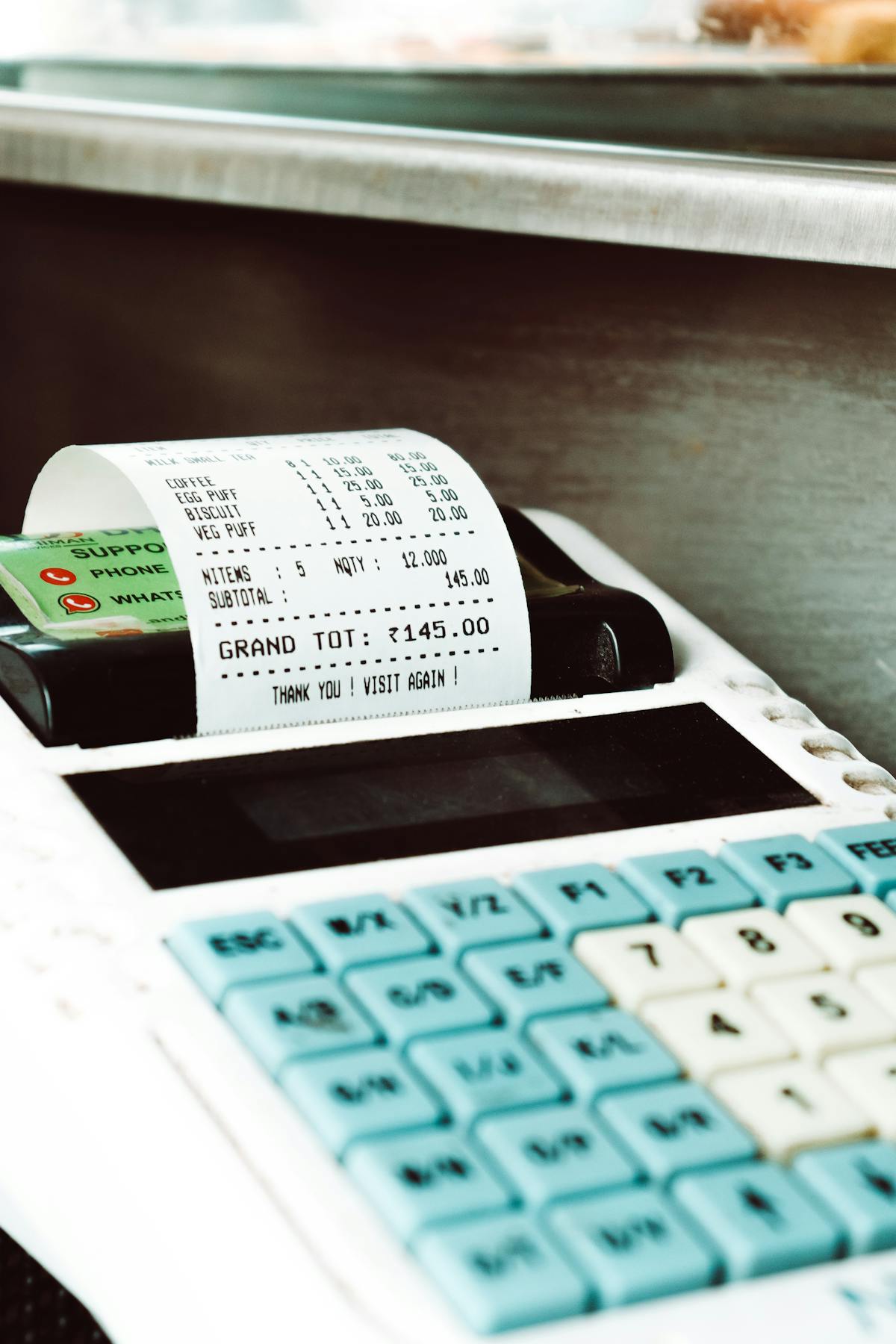
If a client asks you to reference your invoice number and all you have in front of you is a receipt, you already know the problem: a receipt does not contain an invoice number. These are two separate documents with separate numbering systems. The short answer is simple: it isn’t. The invoice number lives on the invoice. This post explains why that distinction matters, exactly where the invoice number appears on a standard invoice layout, and how to organize both documents so your accounting never gets tangled.
Invoice Number vs. Receipt Number: The Core Difference
An invoice is what you send before money changes hands. You finish a $2,400 brand identity project, send Invoice #2026-031, and wait for payment. The invoice number, 2026-031 in this example, is your internal tracking code for that specific billing request.
A receipt comes after payment. When the client transfers $2,400 on June 3rd, you send Receipt #R-089 confirming the funds were received. The receipt number is a separate sequence. It references the payment event, not the outstanding amount.
Some freelancers issue a single combined document that functions as both invoice and receipt. This is common for same-day transactions like a quick logo retainer or a workshop fee collected in person. In that case, the document may carry both an invoice number and a receipt/payment confirmation number side by side. But they are still two distinct identifiers, not interchangeable.
This is why the search often leads to confusion: if the document you’re holding is a pure receipt, the invoice number won’t be on it at all. You need to pull the original invoice.

Where the Invoice Number Appears on a Standard Invoice
On a properly formatted invoice, the invoice number is almost always in the top section of the document, specifically the upper-right corner on most templates, sometimes upper-left. It is labeled clearly: “Invoice Number,” “Invoice No.,” or “Inv #”, followed by the number itself.
The typical layout puts your business name and contact info in the top-left block, and the invoice number, invoice date, and due date in the top-right block. That is where accounts payable looks first. Make it impossible to miss.
Some invoices also repeat the invoice number in the footer and in the PDF filename, for example Invoice_2026-031_ClientName.pdf, so it is visible even before the file is opened.
What Numbers Can Appear on a Receipt
A receipt typically shows:
- Receipt number: the receipt’s own sequential ID (e.g., R-089)
- Reference to the invoice number paid: a well-formatted receipt will note “Payment for Invoice #2026-031”
- Transaction or confirmation number: the reference ID from the payment processor (Stripe, PayPal, bank transfer ID)
- Date and amount: June 3, 2026 / $2,400.00
The third item, the payment processor’s transaction number, is often mistaken for an invoice number. If a client sends you a PayPal confirmation email and asks for the invoice number, they are not asking for the PayPal transaction ID. They want the number on the original invoice you sent them.
If you issue receipts, include a line that ties back to the original invoice: “This receipt confirms full payment of Invoice #2026-031 dated June 1, 2026.”
When a receipt references an invoice, look in these fields:
- Reference or Invoice Reference: often in the header, e.g., “Invoice Reference: INV-2026-047”
- For or Re: e.g., “For: Invoice #2026-047, Brand Design Project”
- Transaction details: e.g., “Payment re Invoice #2026-047, full balance”
- Notes or memo: at the bottom
A receipt confirms payment. An invoice requests it. If someone asks for your invoice number and you only have a receipt in front of you, go back to the original invoice. The invoice number will not appear on a receipt unless you explicitly added a reference line.
When a Receipt Doesn’t Include an Invoice Number
Not every receipt references an invoice. Point-of-sale and e-commerce receipts confirm the sale but have no prior invoice. Payment platform confirmations like PayPal, Stripe, or Venmo show transaction IDs, not invoice numbers. Bank transfers only include the invoice number if the payer put it in the transfer notes. Cash receipts may or may not include it.
How to Match a Receipt to an Invoice Without a Shared Number
If you need to reconcile a receipt to an invoice and there’s no shared reference, try these steps:
- Match by amount and date. Find the invoice with the same total and a due date near the receipt date.
- Check payment notes. Bank transfer confirmations sometimes include a memo field where the payer wrote the invoice number.
- Use three-way matching. Combine date, amount, and vendor or client name to identify the correct invoice.
- Ask the payer. “Can you let me know which invoice this payment is for?” is a routine accounting question.
Common Mix-Ups Freelancers Run Into
Confusing PO numbers with invoice numbers. A purchase order (PO) number is your client’s tracking number. They generate it on their end before work starts. Your invoice number is yours. Both can appear on the same invoice document. If a client says “reference PO-7742 on your invoice,” you write their PO number in the appropriate field and assign your own invoice number (2026-031) as a separate identifier.
Sending a receipt when a client wants an invoice. If a new client says “please invoice me for the $1,200 deposit,” they are asking for a billing document with payment terms, your bank details, and a due date. Sending a receipt implies payment already happened. That misunderstanding can delay the actual payment by days while you clarify back and forth.
Skipping invoice numbers for early clients. A lot of freelancers bill their first few clients informally, a PayPal request here, a Venmo there, with no formal invoice number. Then six months later, when they are tracking income for taxes or a client disputes a charge, there is no paper trail. Start numbering from Invoice #001 on day one. It costs nothing and saves hours during tax season.
Using the same number sequence for invoices and receipts. Keep these separate. If Invoice #23 and Receipt #23 both exist in your records, reconciling them becomes a headache. Use prefixes: INV-023 for invoices, RCP-023 for receipts.
Building a Simple Invoice-to-Receipt Tracking System
You do not need accounting software to stay organized, though it helps. A spreadsheet with these columns works for most freelancers:
| Invoice # | Client | Invoice Date | Amount | Due Date | Receipt # | Payment Date | Method | Status |
|---|---|---|---|---|---|---|---|---|
| INV-031 | Tanaka Design Co. | Jun 1 | $2,400 | Jun 15 | RCP-089 | Jun 3 | Bank transfer | Paid |
| INV-032 | Flores Media | Jun 5 | $850 | Jun 19 | None | None | None | Unpaid |
When you receive payment for INV-032, you fill in the receipt number and payment date, then mark it paid. Every invoice has a corresponding receipt. Every receipt points back to an invoice. If a client emails six months later asking where is the invoice number on a receipt you sent them, you can look up the receipt number, trace it to the invoice, and reply with the invoice number in under 30 seconds.
When You Need to Pull an Invoice Number Fast
Two situations come up constantly for freelancers:
Tax time. Your accountant asks for a list of all invoices issued in the year. You need sequential invoice numbers and matching payment dates. If you issued 47 invoices in 2026, each needs its own number and a clear link to when and how it was paid.
Client disputes. A client claims they paid Invoice #2026-031 twice by accident and wants a refund. You check your records: INV-031 has one receipt entry, RCP-089, $2,400, June 3. There is no second payment on file. You send them that data and the dispute resolves in one exchange instead of a week of back-and-forth emails.
The discipline of keeping invoice numbers and receipt numbers separate and clearly documented is what separates freelancers who can handle $80,000 per year in billing without a bookkeeper from those who can’t.
Ready to send stronger proposals?
Build, send, and track proposals in one place so follow-up is easier.
Start your free trial →