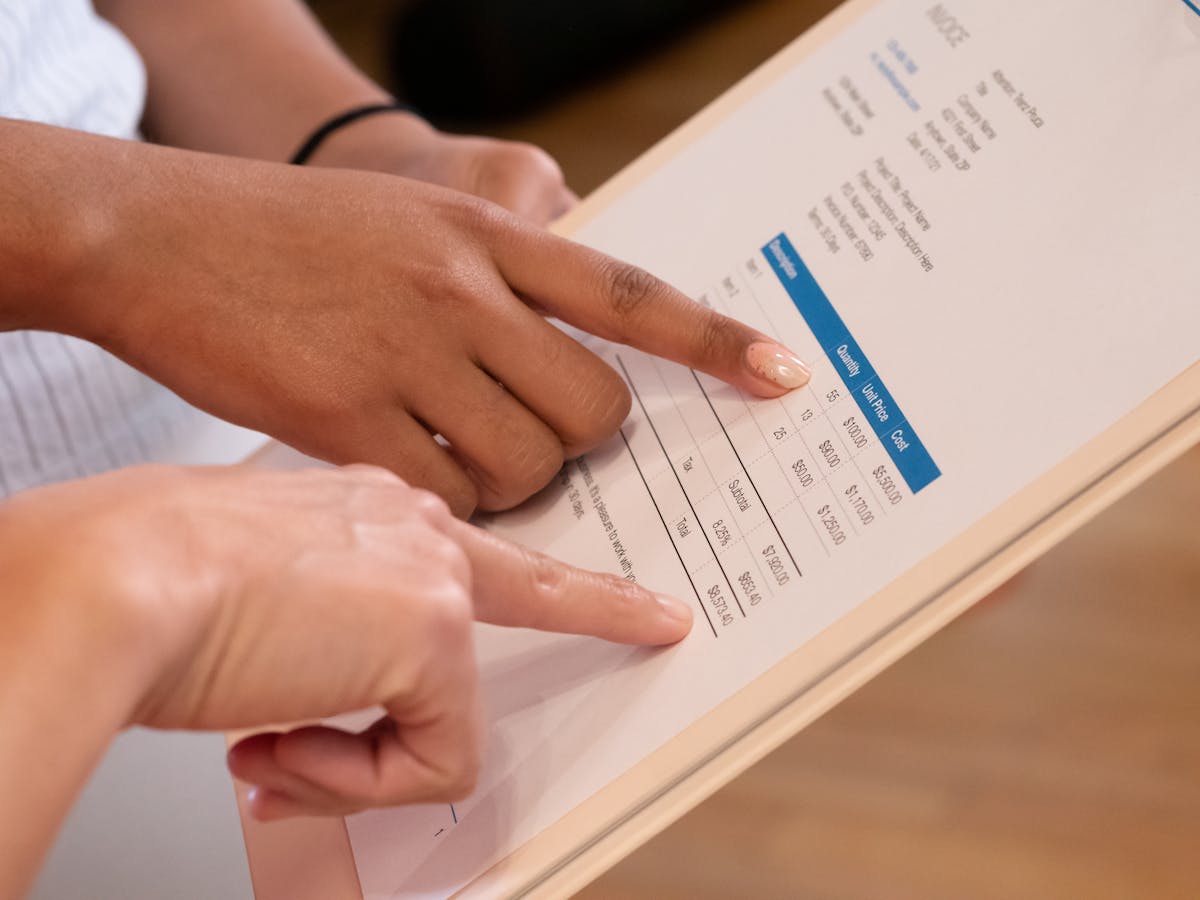
A good past due email gets payment without breaking the relationship. The wrong approach turns a late payment into a fight. Here are templates to adapt and use now.
Template 1: Gentle Reminder (5-7 Days Late)
Use this when payment is just slightly past due and you’re assuming it’s an oversight.
Subject: Quick Check on Invoice #[NUMBER]
Hi [Name],
I wanted to follow up on invoice #[NUMBER] for $[AMOUNT], which was due on [DATE].
Just checking if you received it and if there are any issues with payment. If you’ve already sent payment, please disregard this note. Otherwise, could you let me know when we can expect the payment?
You can reply here or use this payment link: [LINK]
Thanks, [YOUR NAME]
This approach is casual and assumes good intent. Most clients respond within a day with payment or a reasonable explanation.
Template 2: Formal Past Due Notice (10-15 Days Late)
Use this when the gentle reminder didn’t work and you need to escalate.
Subject: Past Due Notice: Invoice #[NUMBER] - Payment Required
Dear [Name],
This is to notify you that invoice #[NUMBER] in the amount of $[AMOUNT], originally due on [DATE], remains unpaid and is now [NUMBER] days past due.
We request immediate payment of the outstanding balance. Payment can be made via:
- Bank transfer: [DETAILS]
- Credit card: [LINK]
- Check: [ADDRESS]
Per our agreement, a late fee of [PERCENTAGE]% per month will begin accruing on [DATE] if payment is not received. Please arrange payment within 5 business days to avoid additional charges.
If you have questions or payment is already in process, please contact me immediately.
[YOUR NAME] [CONTACT INFORMATION]
This tone is professional but firm. It references your late fee policy and gives a specific deadline.

Template 3: Escalation Notice (20-30 Days Late)
Use this when payment is significantly overdue and previous attempts haven’t worked.
Subject: Final Notice Before Collections: Invoice #[NUMBER]
Dear [Name],
Despite previous payment requests, invoice #[NUMBER] for $[AMOUNT] (originally due [DATE]) remains unpaid as of [CURRENT DATE], now [NUMBER] days past due.
This is a final notice before we pursue additional collection measures.
Amount Due: $[AMOUNT] + Late Fees of $[LATE FEE AMOUNT]
Action Required: Payment must be received within 5 business days ([SPECIFIC DATE]).
If payment is not received by this date, we will:
- Suspend all services and ongoing work
- Report this account to collections agencies
- Pursue legal action to recover the debt
Payment details: [PAYMENT METHODS]
If there are legitimate issues preventing payment, contact me immediately to discuss a payment plan.
[YOUR NAME] [CONTACT INFORMATION]
This is your last communication before taking legal or collections action. The tone is serious, but it still leaves room for negotiation if the client reaches out.
Template 4: Payment Plan Negotiation (If Client Responds)
Sometimes a client is willing to pay but genuinely can’t immediately. This template allows negotiation while protecting yourself.
Subject: Re: Payment Plan for Invoice #[NUMBER]
Hi [Name],
Thank you for reaching out about the outstanding balance. I understand that timing can be difficult, and I appreciate you communicating about it.
I’m willing to work out a payment plan to resolve this. Here are options:
- Option 1: 50% by [DATE], 50% by [DATE]
- Option 2: Three equal payments of $[AMOUNT] on [DATE], [DATE], [DATE]
Late fees will continue to accrue on the unpaid balance until the account is settled. Please confirm which option works for you, and we’ll consider this resolved once we agree.
Once we have agreement on a plan, I can suspend collection efforts and we can continue working together.
Let me know your preference.
[YOUR NAME]
This shows flexibility while making clear that you have limits. Once a client agrees to a payment plan, follow up to ensure they stick to it.
Template 5: Collection Agency Notification
If you’re turning the account over to collections, notify the client first.
Subject: Account Being Referred to Collections
Dear [Name],
Invoice #[NUMBER] for $[AMOUNT] has now been unpaid for [NUMBER] days despite multiple collection attempts. As of [DATE], we are referring this account to [COLLECTIONS AGENCY NAME] for collection.
This action will appear on your credit report and may result in additional collection fees and legal action.
If you wish to resolve this before referral, payment of $[TOTAL WITH LATE FEES] is due immediately.
Payment details: [PAYMENT METHODS]
After [DATE], collection efforts will be handled by third parties and you will no longer be able to settle directly with us.
[YOUR NAME] [CONTACT INFORMATION]
Send this before you actually refer to collections. Many clients will pay when they see this notice.
Tips for Using These Templates
Personalize. Don’t copy-paste placeholders. Use their name, specific amounts, actual dates. Generic emails signal you’re not serious.
Space out your emails. Give them real time to respond before escalating. Days 5-7: gentle. Days 15-20: formal. Days 30+: escalation.
Keep email copies. If disputes or legal action happen, you need proof you tried to collect.
Use Waco3 to send reminders automatically. Schedule emails for specific days so clients get reminders without your manual effort.
Start friendly, escalate gradually. Most late payments resolve with one gentle reminder. Save aggressive templates for clients ignoring multiple requests.
When to Go Beyond Email
After 30 days past due with no email response, call. Conversation often works faster than email. They might have legitimate reasons (payment sent but lost, department issue, bankruptcy), and you won’t know until you ask.
If the call doesn’t work, escalate to formal collections or legal. Always try conversation first.
One Final Note
These templates work because they’re clear, professional, and gradually escalate. Use gentle first. If no luck, formal. Then escalation. Each step takes 5-7 days.
Goal is payment, not punishment. Respect them while showing you’re serious about collecting. The client responding to a professional past due email might become future business. The one you sue is gone forever.
Related: How to Write a Past Due Invoice Letter and What Happens When an Invoice Is Past Due?
Ready to send stronger proposals?
Build, send, and track proposals in one place so follow-up is easier.
Start your free trial →