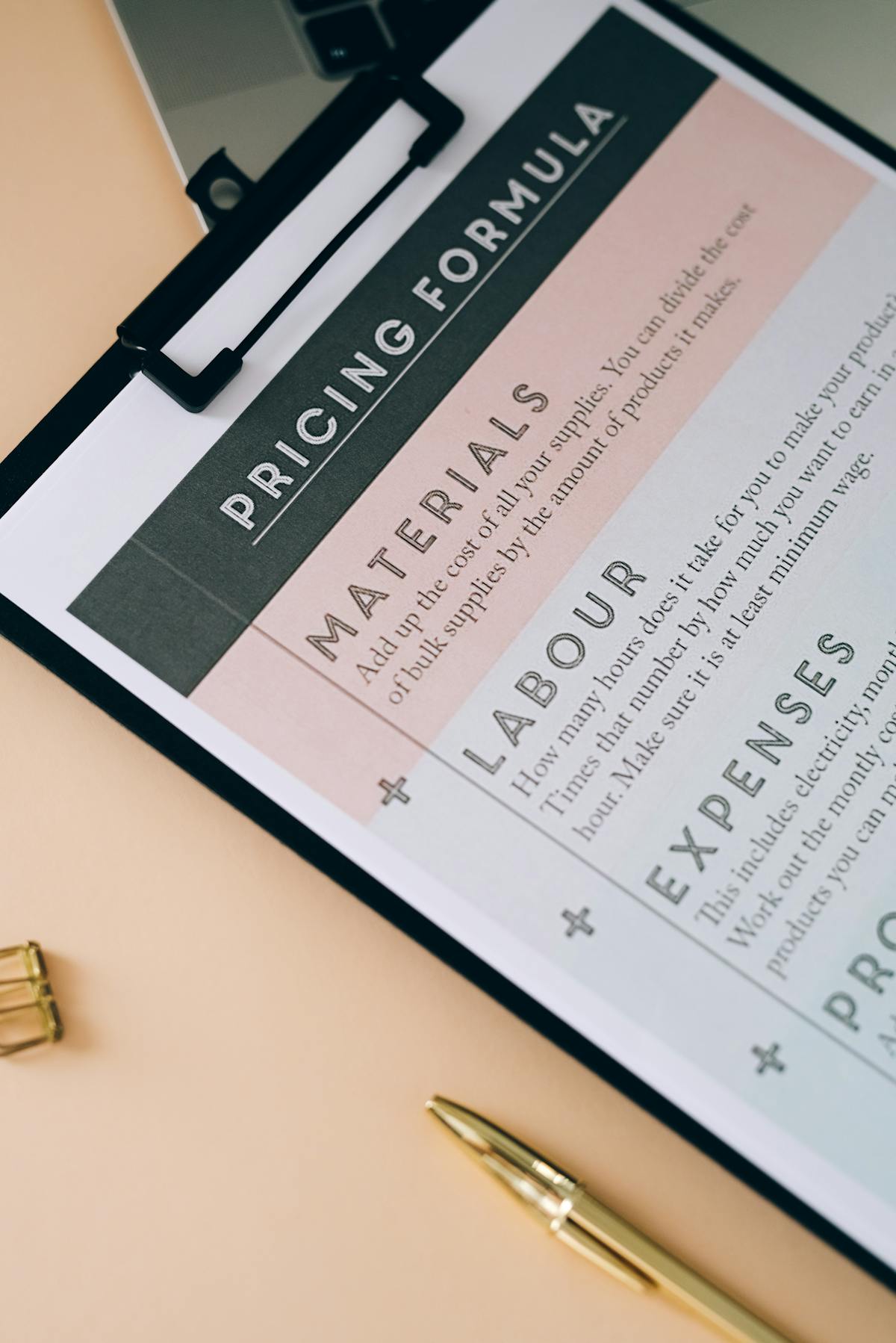
Most proposals present a price as if the buyer already understands how it was built. They don’t. The buyer sees a number and begins a process that has nothing to do with your methodology: they compare it to their budget ceiling, their gut sense, and whatever competing quotes are in their inbox. The Pricing Logic Page interrupts that process. It provides the explanatory frame before the comparison begins. When a buyer reads why a price is $11,500 before they see $11,500, the number lands differently, as a conclusion of a process, not a demand from a stranger.
What the Pricing Logic Page Is Not
It is not an apology. It is not a justification. It is not a breakdown of your hours that invites the buyer to audit your time.
Those three formats undermine confidence. An apology signals that you are uncertain about the price. A justification signals that you expect resistance. A time-based breakdown invites the buyer to compare your hourly rate to alternatives, which is a losing comparison for premium service providers.
The Pricing Logic Page is an explanation, the same explanation you would give a respected colleague who asked: “How did you come to this number?” It is transparent without being defensive, grounded in data without being mechanical, and confident without being dismissive.
The Four Elements
Element 1: Methodology Statement (2–3 sentences). How do you price? Outcome-based, scope-based, value-based, or a hybrid? State it plainly. “My pricing is scope-based and outcome-calibrated. I start with the deliverables and timeline, then adjust for the complexity of the client’s situation and the market value of the outcome the work produces.”
Element 2: Scope Basis (3–5 bullet points). What specific inputs drove this number? Not hours, scope decisions. “This engagement includes three strategic workshops, four deliverable documents, two revision rounds, and six weeks of implementation support. The depth of the discovery phase is included because [specific reason the client’s situation warrants it].”
Element 3: Market Benchmark (1 comparison table or 2–3 sentences). Where does your price sit relative to the market? Show this with a simple range reference: “Engagements of comparable scope in this category typically range from $8,000 to $18,000. This proposal is positioned at $11,500, reflecting [specific differentiator: your specialization, delivery speed, or track record].”
Element 4: ROI Calculation (2–4 sentences or a simple table). What does the investment return? Conservative projection, clearly labeled. “At current pipeline metrics, a 2-point improvement in conversion rate represents approximately $84,000 in first-year incremental revenue. The $11,500 investment represents a 7.3x ROI multiple on that conservative projection.”
The four elements work together: methodology shows competence, scope basis shows precision, benchmark shows market awareness, ROI math shows financial literacy. None alone is sufficient. Together, they make the price feel inevitable rather than arbitrary.
Placement in the Proposal
The Pricing Logic Page belongs immediately before the investment summary, not after. The sequence matters.
Wrong sequence: Investment total → Pricing Logic Page
When the buyer sees the number first, the logic reads as a post-hoc rationalization. The number has already been processed and evaluated. The explanation arrives too late to change the frame.
Right sequence: Scope overview → Pricing Logic Page → Investment total
The buyer reads the scope, reads the logic, then encounters the number, already framed by the explanation. The number feels like a conclusion, not an assertion.
The Comp Table Format
The market benchmark element is most effective as a simple three-column table:
| Engagement Type | Market Range | This Proposal |
|---|---|---|
| Full-scope strategy + implementation | $14,000–$22,000 | $11,500 |
| Strategy only | $6,000–$10,000 | , |
| Implementation only | $8,000–$14,000 | , |
Three rows is enough to establish context. The goal is to show the buyer that full-scope comparable work runs above this proposal’s price, not to build a comprehensive rate survey. More than five rows shifts from benchmark to data dump.
The comp table should make one point: your price is within or below the range for comparable scope. Every additional row dilutes that point and invites the buyer to find the cheapest row and anchor there.
The Confidence Principle
The Pricing Logic Page works because it signals confidence in the price. Confident prices do not require apology or defensive framing, they require explanation. The page demonstrates that you have thought carefully about the investment, you understand the market, and you have done the ROI math the buyer’s finance team will eventually ask for anyway.
A buyer who reads a well-constructed Pricing Logic Page rarely asks “can you do it for less?” They may ask “can we adjust the scope?”, which is a legitimate professional conversation. That shift is the page’s primary function: from price negotiation to scope calibration.