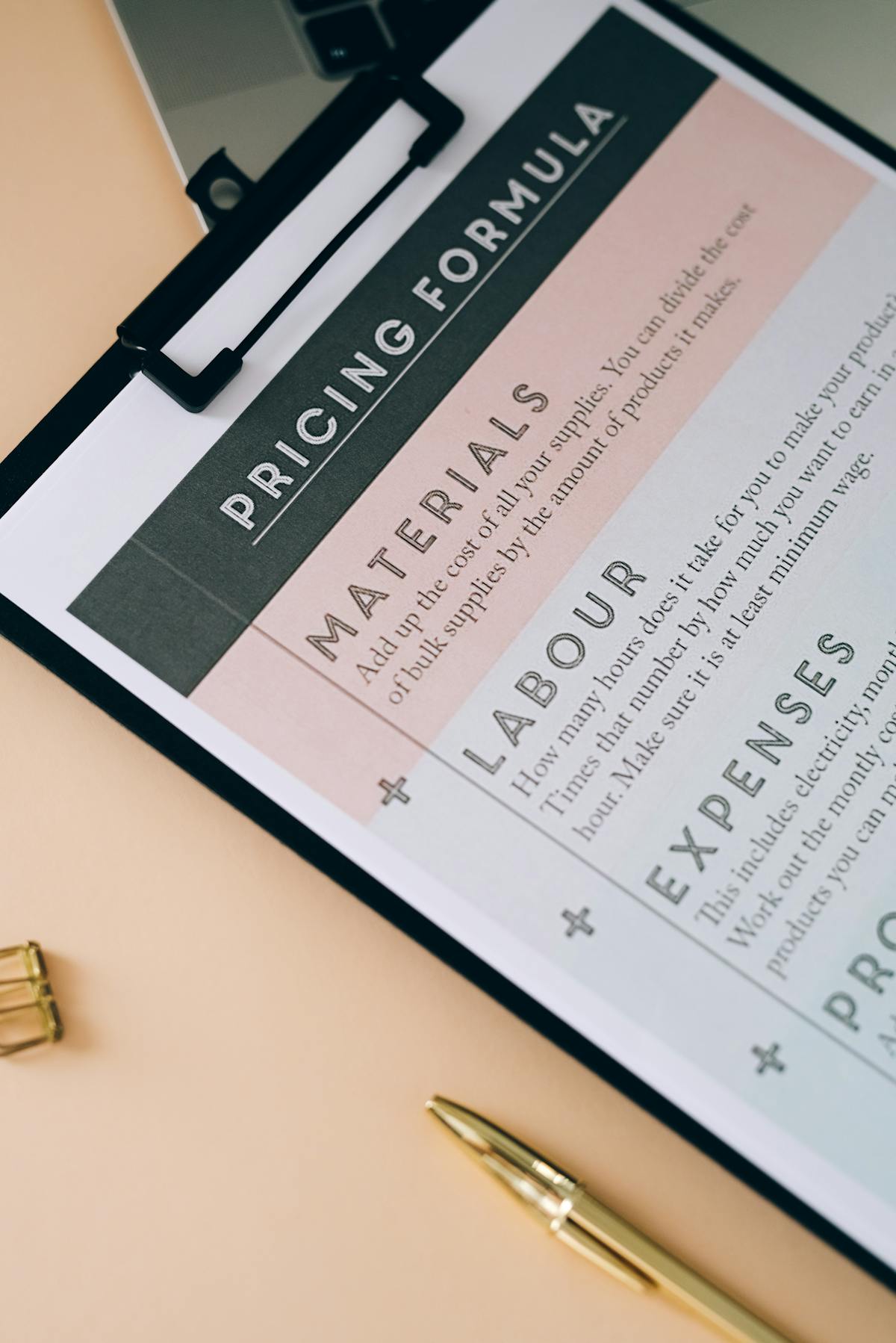
The pricing page debate never fully resolves because both sides are right for different situations. Freelancers who publish rates swear it eliminates time-wasting calls. Freelancers who keep prices off their site swear the flexibility wins them bigger projects. Both groups are correct, for their specific business models. The question isn’t “should I show prices?”, it’s “what does public pricing do to my pipeline, and do I want that?”
What Public Pricing Actually Does
Publishing prices on your website changes the composition of your inbound leads, not just the volume. The most documented effects:
Leads who contact you have already self-qualified. They’ve seen your rates and decided to reach out anyway. Discovery call conversion rates tend to be 40–60% higher for freelancers with public pricing vs. those without.
Tire-kicker volume drops significantly. Expect 30–50% fewer inbound inquiries overall, but those inquiries are worth more of your time.
Anchoring shifts in your favor. A prospect who saw “$6,500 project minimum” on your site is not comparing your proposal to a competitor’s $1,500 quote. The anchor has already been set.
You attract peers, not prospects. Transparent pricing makes you visible to other professionals who send referrals at similar rate levels, a compounding benefit over time.
The downside: public pricing can cap perception for complex projects. If your rate card shows “$4,500–$8,000,” a client with a $25,000 budget may assume you can’t handle their scope, when in fact you could.
What Hidden Pricing Does
Removing prices from your website or rate card does the opposite: it widens the top of funnel and gives you maximum flexibility in conversations.
Every prospect self-qualifies less before calling. You get more conversations, more variety in budget levels, and more opportunities to close upward from an initial inquiry.
You can price based on context. Enterprise client with a $50,000 budget gets a different conversation than a startup founder with $8,000. Neither saw a rate that pre-framed their expectations.
The discovery call does the qualification work. Budget conversations happen live, where you can respond and adjust in real time.
The downside: you absorb all the friction of unqualified conversations. If your time-to-close is long and your conversion rate from first call to signed contract is under 30%, hidden pricing is likely costing you 8–12 hours per month on conversations that were never viable.
Hidden pricing is a volume strategy. Public pricing is an efficiency strategy. Choose based on where your business bottleneck is, not based on what feels more comfortable.
The 4-Axis Decision Matrix
Run your business through these four axes to determine your pricing page approach:
Axis 1: Service variability. Are your projects mostly fixed-scope (same deliverables, predictable cost) or highly variable (scope changes dramatically by client)? Fixed-scope services are strong candidates for public pricing. Variable-scope services are better served by ranges or “starting from.”
Axis 2: Rate level relative to market. Are your rates in the top 25% of your market? Public pricing helps because it signals premium and filters in buyers who have already decided to invest at that level. Are you at median or below? Public pricing may commoditize your services, buyers will comparison-shop against your published number.
Axis 3: Lead quality vs. lead volume. Is your current problem too few qualified leads or too many unqualified ones? Too few qualified leads suggests you need either better positioning or more traffic, public pricing alone doesn’t fix acquisition. Too many unqualified leads is precisely what public pricing solves.
Axis 4: Sales confidence. Can you hold your rate in a live conversation when a prospect pushes back? If yes, hidden pricing plus a strong discovery call process works. If you tend to discount under pressure, public pricing removes the live negotiation from the equation, the rate is already stated, and prospects who reach out have implicitly accepted it.
The Starting-From Hybrid
The most flexible solution for most mid-market freelancers is the “starting from” approach: publish a clear floor price without revealing the full range or ceiling.
“Brand strategy engagements start at $7,500.” “Monthly retainers from $3,200.” “Website projects starting at $9,000.”
This format filters out prospects below your floor (the primary value of public pricing) while preserving your ability to scope larger projects upward without being anchored to a ceiling (the primary value of hidden pricing).
The key: the starting-from number must be a genuine floor, not a teaser designed to attract calls you’ll then redirect upward. Prospects who call based on a $3,200 floor and get quoted $9,000 on the first call feel deceived. The starting-from price must represent real work you actually do at that investment level.
Starting-from pricing works when it answers the prospect’s first question, “can I afford this?”, without answering their second question, “exactly how much will mine cost?”, which requires a discovery conversation to answer honestly.
Where to Put the Pricing Page
If you decide to publish prices, placement matters. The highest-performing structure for freelance and consultancy sites:
Homepage: No prices. Focus on outcomes and positioning.
Services page: Starting-from numbers next to each service, with a link to more detail.
Dedicated pricing page: Full package breakdown with a comparison table, FAQs addressing the most common objections, and a clear CTA to book a discovery call.
Proposal template: Final confirmed price in the first section, not buried on page 4.
Freelancers who bury pricing information on a page that requires three clicks to find get the worst of both worlds: prices are technically visible, but the friction means unqualified prospects still request proposals anyway.
The Test Worth Running
If you are uncertain, run a three-month test. Add a starting-from price to your services page for 90 days. Measure: number of inbound inquiries, conversion rate on calls, average project value, time spent on unqualified calls. Compare to the prior 90-day period. The data will resolve the debate more conclusively than any framework.