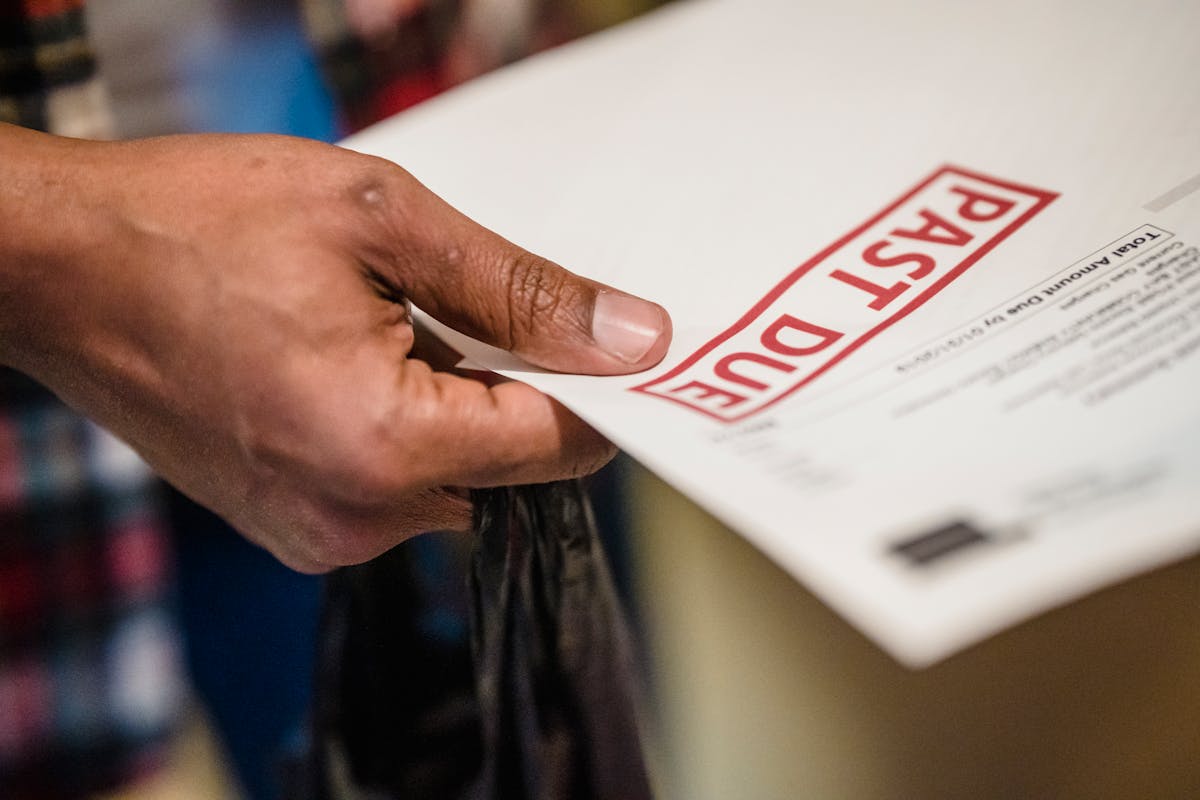
A past due invoice email needs the right tone. Too polite signals weakness. Too aggressive damages the relationship. Real samples show how to find the balance at each stage of delinquency.
Sample 1: The Gentle First Reminder (5-10 Days Late)
Use this template when payment is just past due. Assume it’s an honest oversight.
Subject: Invoice #2847 – Friendly Payment Reminder
Hi [Client Name],
I hope you’re doing well. I wanted to reach out regarding Invoice #2847 for $1,800, which was due on [date]. I haven’t seen payment come through yet.
Could you check if the invoice made it to your accounting team? If you have any questions about the work performed or need a corrected invoice, I’m happy to help.
If payment is already in transit, please disregard this note. Otherwise, I’d appreciate payment by [date 2-3 days away].
Thanks so much, [Your Name]
This tone is warm and helpful. You’re offering assistance, not demanding. Most clients respond within 24 hours with either payment or an explanation. The key is assuming good faith.
Sample 2: The Direct Second Notice (20-30 Days Late)
If the first email gets no response, escalate. This sample is noticeably more formal.
Subject: Unpaid Invoice #2847 – Requires Immediate Attention
[Client Name],
This is my second notice regarding Invoice #2847 for $1,800, due [original date]. Payment is now [X] days overdue.
I need to receive payment by [specific date, 5 business days away] to keep this from escalating further.
If you’re experiencing cash flow challenges, I’m open to discussing a payment plan. Otherwise, payment should be remitted immediately via [payment method].
Invoice details: Invoice #: 2847 Amount: $1,800 Services: [brief description] Due Date: [original date]
Please confirm receipt of this email and your payment plan.
[Your Name]
Notice the shift. “Friendly reminder” becomes “second notice.” You’ve added specifics: exact dollar amount, invoice number, service description. You’re forcing the client to engage by asking for confirmation. You’re also signaling that non-payment has consequences (“escalating further”).
Include invoice number, exact amount, and due date. This signals serious correspondence, not a casual message.
Sample 3: The Final Notice (45+ Days Late)
At this stage, you’re protecting your interests and creating legal documentation.
Subject: FINAL NOTICE – Invoice #2847 Past Due Payment Required
[Client Name],
Invoice #2847 for $1,800 is now [X] days past due. I have sent you two previous payment requests without resolution.
This is my final notice before escalating this matter. Payment of $1,800 must be received by [specific date, 5 business days away].
Failure to remit payment by this date will result in:
- Referral to a collections agency
- Reporting to credit bureaus
- Legal action to recover payment, including court costs and attorney fees for which you will be responsible
If you dispute any charges on this invoice, you must provide written documentation within 2 business days. Otherwise, payment is due in full.
Please confirm receipt of this notice.
[Your Name] [Your Business Name] [Contact Information]
This is a legal document. No friendliness. No negotiation language (except the dispute clause). You’re establishing that you made serious attempts to collect before pursuing other remedies. Courts and collections agencies value this documentation.
Sample 4: When the Client Claims They Paid
Sometimes clients insist they already paid. Respond with facts:
Hi [Client],
Thank you for your response. I’ve checked our records and accounting system, and I show no payment received for Invoice #2847 as of today.
Can you provide:
- Date you processed the payment
- Payment method (check number, wire confirmation, credit card last 4 digits)
- Amount paid
Once I confirm the payment details, I can investigate with my bank or see if there’s a posting delay. If the payment is genuinely in transit, I appreciate the update.
If no payment was actually sent, please process it immediately to avoid further action.
[Your Name]
You’re forcing them to provide proof. Many clients will admit they haven’t actually paid. Some genuinely have—a confirmation number helps you find the missing payment.
Sample 5: Payment Plan Negotiation
If the client is struggling financially, you can offer a plan:
Hi [Client],
I received your email about cash flow challenges. I’m willing to work with you on a payment arrangement for Invoice #2847 ($1,800).
Here’s what I can offer:
- $600 due by [date 1]
- $600 due by [date 2]
- $600 due by [date 3]
This gets you breathing room while ensuring I recover payment. Once we agree on this plan, I’ll put it in writing and we’ll both sign.
If this schedule doesn’t work, let me know an alternative that does.
[Your Name]
This shows flexibility while maintaining firm deadlines. You’re reducing their burden in exchange for commitment. A written payment plan is enforceable if they default again.
Subject Line Strategies for Past Due Invoices
The subject line determines if your email gets opened:
- “Invoice #2847 – Payment Required by [Date]” (specific, authoritative)
- “URGENT: Unpaid Invoice #2847 Needs Attention” (signals seriousness)
- “[Client Name] – Past Due Invoice #2847” (uses their name, triggers attention)
- “Final Notice: Invoice #2847 Payment Escalation” (warns of consequences)
Avoid vague subjects like “Quick Update” or “Checking In.” Clients ignore those. Specific subjects with invoice numbers and urgency language get opens.
Timing Your Follow-Ups
Day 0: Invoice sent Day 5: Pre-due-date reminder Day 3 after due: First follow-up (gentle) Day 20 after due: Second notice (firm) Day 45 after due: Final notice (formal) Day 60+ after due: Collections agency referral
This timeline gives clients room for honest oversights while establishing that you enforce terms. By day 45, non-payment is intentional, and you should escalate.
Automation Reduces Back-and-Forth
Manual follow-ups are tedious and easy to forget. Waco3 automates the whole sequence. Set it once: reminder at day 5, notice at day 20, final at day 45. The system tracks opens and documents attempts. You stay free from manual management.
Ready to send stronger proposals?
Build, send, and track proposals in one place so follow-up is easier.
Start your free trial →