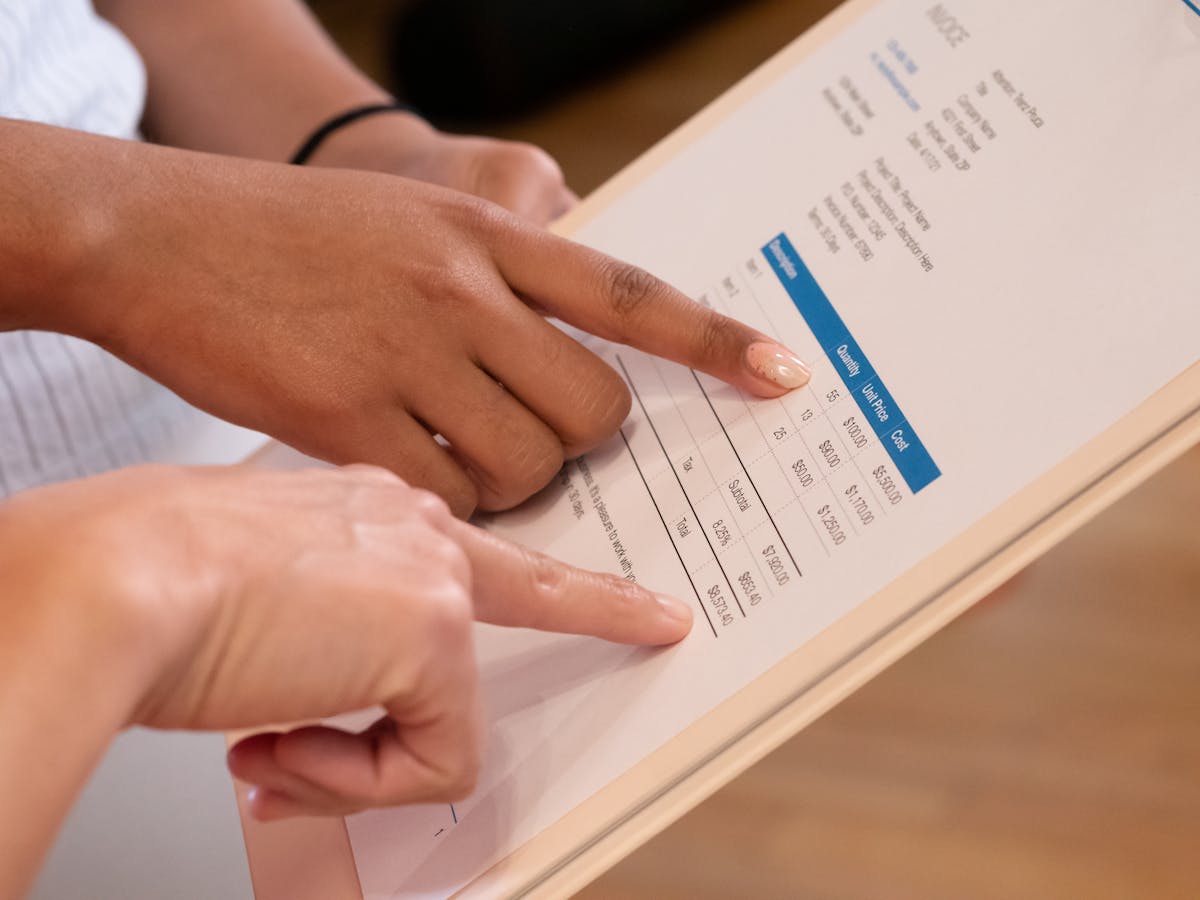
The term “AI invoice writer” covers a spectrum of tools — from true generative AI that creates invoice content from a plain-language description, to glorified fill-in templates that call themselves AI. Here’s what these tools actually do, which ones are genuinely useful, and how to use AI effectively in your invoicing workflow.
Invoice writing is not the hard part of freelancing. The hard part is getting paid reliably, following up on late payments without it feeling awkward, and keeping your accounting clean. AI tools help most with the formatting and description-writing parts — the busywork. They don’t replace judgment about what to charge, how to structure payment terms, or when to escalate a late payment.
What AI invoice tools actually do
There are three distinct types of tools that call themselves “AI invoice writers”:
Type 1: AI content generators These use large language models (like GPT-4 or Claude) to generate invoice descriptions, service summaries, and line item text from a prompt. You describe what you did in plain language, and the AI formats it into professional invoice copy.
Example prompt to ChatGPT: “Write a freelance invoice description for web development work — I built a 5-page marketing site for a law firm, including custom design, mobile optimization, and CMS integration. Project took 3 weeks. My rate was $8,500 fixed price.”
Output: Professional line item descriptions, a project summary, and suggested payment terms.
Type 2: Automated invoice generators These are structured tools that create invoice documents from your inputs — name, client, services, amounts. They’re called “AI” in marketing but are closer to smart form-to-PDF tools. Still useful for speed, not technically generative AI.
Type 3: Integrated invoicing software with AI features These tools (FreshBooks, Waco, Wave with AI add-ons) use AI within a complete invoicing workflow — suggesting line items based on past invoices, auto-categorizing expenses, or drafting payment reminder emails. The AI is one feature within a larger tool.
Most freelancers benefit most from Type 3 — AI features embedded in software that also handles sending, tracking, and payment collection.
Top AI invoice tools: what each one does
Waco
What it does: Proposal-to-invoice workflow with AI-assisted content. Create a project proposal with AI-suggested scope descriptions, then convert it to an invoice when the project completes. Includes payment links, read receipts, and automated reminders.
Best for: Freelancers and agencies who send proposals before starting work. The AI ties into the proposal content so the invoice descriptions match the agreed scope.
Free tier: Yes (limited projects).
AI-specific feature: AI drafts proposal and invoice descriptions from a project description you provide. You review and adjust before sending.
FreshBooks
What it does: Full-featured invoicing and accounting software with AI-assisted features including automatic expense categorization, late payment prediction, and invoice description suggestions.
Best for: Established freelancers or small agencies billing 10+ clients per month who also need expense tracking and time logging.
Free tier: No (30-day free trial, then $19+/month).
AI-specific feature: Smart suggestions for invoice line items based on time logged. Auto-categorizes expenses from bank feeds.
Wave
What it does: Free invoicing and accounting software. AI features are growing — currently includes smart categorization and some invoice automation.
Best for: Freelancers who want free, professional invoicing without needing deep AI features.
Free tier: Yes (invoicing is always free; payments add a transaction fee).
AI-specific feature: Basic line item suggestions and categorization. Less AI-forward than premium tools.
Invoice Ninja
What it does: Open-source invoicing software with strong automation features. Free for up to 20 clients, self-hostable for privacy-conscious users.
Best for: Freelancers who want powerful automation (recurring invoices, automatic reminders, client portals) without a monthly fee.
Free tier: Yes (up to 20 clients).
AI-specific feature: Limited AI features, but strong automation that handles what most freelancers use “AI invoicing” for.
ChatGPT / Claude (general AI for invoice drafting)
What it does: Not invoicing software — but both tools can generate professional invoice descriptions, draft payment reminder emails, and format invoice content when given a structured prompt.
Best for: Freelancers who have their own invoice format and just want AI to write better service descriptions or draft follow-up emails.
Free tier: Yes (ChatGPT free tier and Claude.ai free tier).
Limitation: Outputs text only. You copy the content into your invoicing tool — there’s no automation, payment links, or tracking.
How to use AI effectively for invoice writing
Using a general AI tool (ChatGPT or Claude)
Give the AI a detailed, structured prompt. The more specific you are, the more usable the output.
Effective prompt:
“Write a professional invoice line item description for the following work: I designed and developed a custom Shopify theme for an apparel brand. Work included: wireframes (2 revisions), custom design mockups (3 pages, 2 revisions each), Shopify theme development (responsive, mobile-first), integration with existing product catalog, and 2 hours of post-launch support. Fixed price: $6,500. Client is Meridian Apparel Co.”
Less effective prompt:
“Write an invoice for web design work”
The AI’s output is only as good as your input. Give it specifics — client name, deliverables, timeline, price — and you get usable copy. Give it vague descriptions and you get generic filler.
Using AI for payment reminder emails
AI tools are particularly effective at drafting late payment follow-up emails — they can adjust tone from friendly to firm and generate multiple versions quickly.
Prompt example: “Write a polite but firm second reminder email for an overdue invoice. Invoice #INV-2026-047, $3,200, due May 1, now 10 days late. Client is a small marketing agency. I’ve sent one reminder already on May 2.”
The output will be close to send-ready — just add the specific payment link and your signature.
AI invoice tools work best as first-draft generators, not final-output machines. Always review AI-generated invoice content before sending. Numbers, dates, and client names are the places where errors slip through — an AI that gets your service description right but misformatted the invoice total is worse than no AI at all.
Limitations of AI invoice writers
No verification: AI doesn’t know if the numbers you’ve given it are accurate. If you say the project was $8,500, the AI will write $8,500 — whether or not that’s what you agreed with the client.
No client data: General AI tools don’t know your client’s billing requirements, their preferred payment method, or their accounts payable contact. That context has to come from you.
No payment automation: AI content generators produce text. They don’t send the invoice, track when it’s opened, process the payment, or send reminders. You need a complete invoicing tool for that.
Hallucination risk on complex invoices: If you give the AI a complex multi-milestone project description and ask it to calculate subtotals or figure out outstanding balances, verify the math manually. AI tools can make arithmetic errors.
When to use AI invoicing vs. manual invoicing
Use AI invoicing when:
- You struggle with writing professional service descriptions
- You want faster first drafts for recurring invoice types
- You send a high volume of similar invoices and want automation
- You want AI to draft late-payment reminder emails
- You’re combining invoicing with proposal creation (where AI-assisted proposals add the most value)
Use manual invoicing (templates) when:
- You have 5 or fewer clients with simple, consistent invoices
- Your invoices are highly customized and context-specific
- You prefer full control over every word your client receives
- Your invoicing volume doesn’t justify a subscription tool
Related reading
- Free invoice template for freelancers — Excel, Word, and Google Docs formats if you prefer templates
- How to write an invoice for contract work — the required fields regardless of what tool you use
- Overdue invoice email examples — templates you can use with or without AI
AI invoice tools range from genuinely useful to mostly marketing. The best ones embed AI in a complete workflow — proposal creation, invoice sending, payment links, and automated reminders. The standalone AI content generators are helpful for drafting copy but require you to do the rest manually. Know which category your tool falls into before building your workflow around it.
Ready to send stronger proposals?
Build, send, and track proposals in one place so follow-up is easier.
Start your free trial →