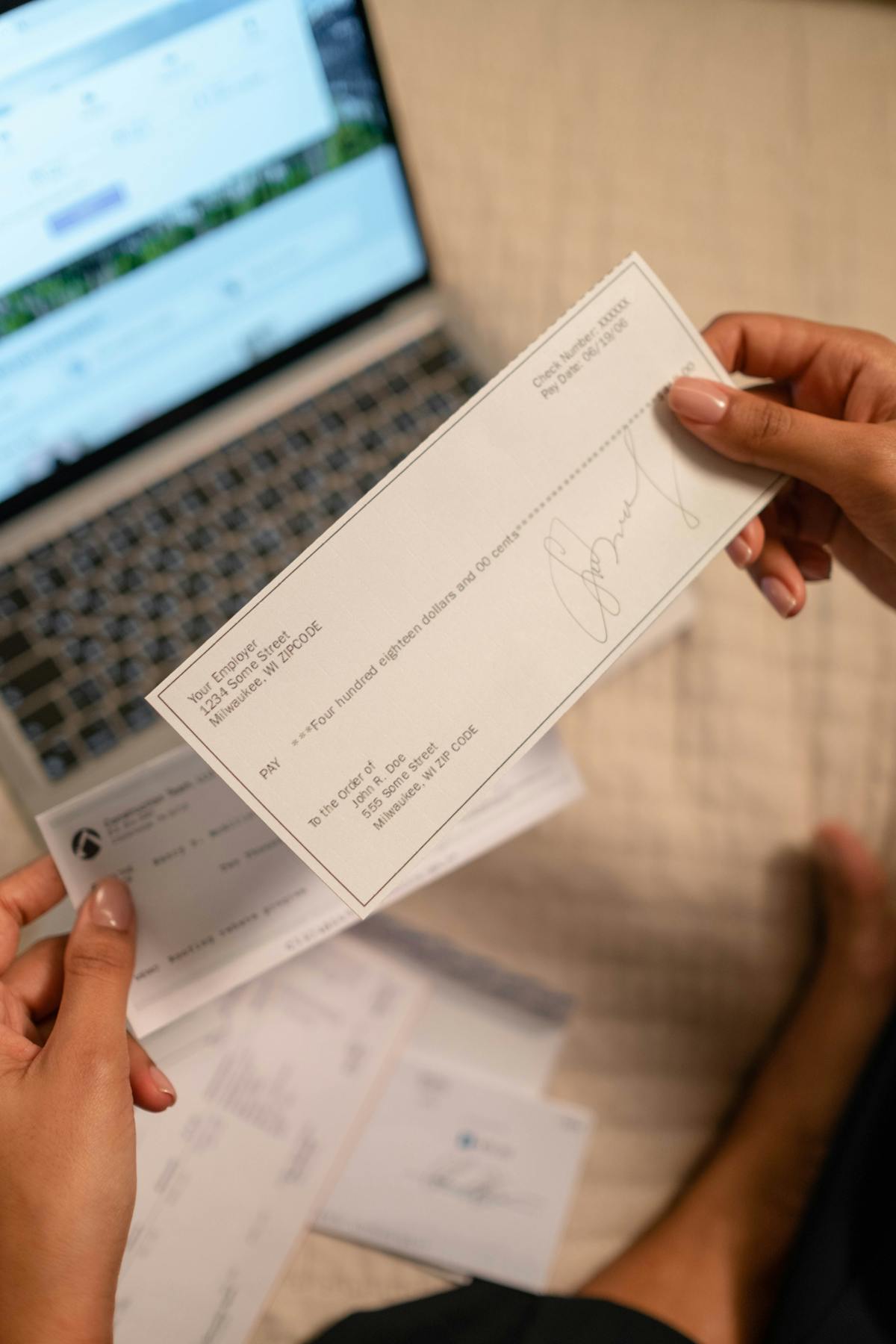
An invoice for completed work is your formal request for payment after a job is done. The structure is consistent across service types — the variables are the descriptions, the amounts, and your payment terms.
The universal invoice structure
Every invoice for work done follows the same basic structure, regardless of whether you’re a developer, designer, writer, photographer, plumber, or consultant:
Header section — who is billing, who is being billed, and the document’s identifying information Body section — what was done and what it costs Footer section — how and when to pay
Section by section
Header section
Your name / business name Use the name under which you operate — your legal name or your registered business name. Include email, phone, and city/state.
Client information Full company or individual name, billing contact if relevant, address. Even if you’ve been working with the same person for months, include a proper “Billed To” section — it’s a legal and accounting requirement.
Invoice number Sequential, unique identifier. Start at 001 or 2026-001 and never repeat. This number is how you and the client track, reference, and reconcile this specific billing event.
Invoice date Today — the date you’re sending the document. This starts the payment clock.
Payment terms and due date Both. “Net 30 — Due June 26, 2026.” Always include the explicit calendar date.
Body section: describing the work
This is where most freelancers undersell themselves through vague descriptions. Be specific.
Avoid:
- “Design services”
- “Consulting”
- “Web work”
- “Writing”
Use instead:
- “Mobile-responsive homepage redesign — wireframes, final Figma files, delivered May 20, 2026”
- “Three 90-minute brand strategy sessions — April 8, 15, 22, 2026; written summary included”
- “E-commerce product page copy — 12 pages, 350 words each, delivered May 25, 2026”
The description should make it obvious what the client received, when they received it, and why the amount is justified.
Rate structure options:
Flat project fee:
Brand identity package (logo, color system, guidelines) — 1 project — $4,500.00
Hourly:
UX consulting — 14.5 hours × $125/hr — $1,812.50
Per deliverable:
Email campaign copy — 6 emails × $200/email — $1,200.00
Mixed:
Website copy (flat fee): $3,000.00 Additional SEO keyword research (3 hrs × $100/hr): $300.00
Footer section: payment instructions
Totals: List subtotal, tax (if applicable — varies by state and service type), and total due. Make the total obvious — larger font or bolded.
Payment methods: List everything you accept with the specific details needed:
- ACH: [Bank, routing #, account #]
- Check: Payable to [Your Name], mailed to [Address]
- Online: [payment link or platform]
Late payment clause: “Invoices unpaid after [due date] accrue interest at 1.5% per month.”
Examples by work type
Freelance writing invoice:
Description Amount Blog post: “Top 10 Accounting Tools for Freelancers” — 1,400 words, SEO-optimized, delivered May 20, 2026 $350.00 Blog post: “How to Set Up a Business Bank Account” — 1,200 words, delivered May 24, 2026 $300.00 Total $650.00
Web development invoice:
Description Hrs Rate Amount WordPress theme customization — homepage and about page 8 $95/hr $760.00 Contact form integration (gravity forms) 2.5 $95/hr $237.50 Performance optimization and testing 3 $95/hr $285.00 Total 13.5 $1,282.50
Photography invoice:
Description Amount Corporate headshots — half-day session, May 18, 2026; 8 edited images at 300 DPI $950.00 Rush editing (delivered within 48 hrs) $150.00 Total $1,100.00
Your invoice description is part of your professional reputation. A vague description looks amateur and slows down payment. A specific description that maps clearly to the approved scope tells the client you track your work carefully — which also makes you harder to shortpay.
Common mistakes when invoicing for completed work
Invoicing too late. Every day you delay sending an invoice is a day you delay payment. Invoice the same day the work is delivered.
Underdescribing the work. “Design work — $2,000” leaves room for confusion. Describe specifically what was made, for what purpose, and when.
Forgetting the due date. “Net 30” is a term. “Due June 26, 2026” is a date. Include both.
No payment method details. “Bank transfer” without routing and account numbers forces the client to contact you. Add the full details.
Missing a late fee clause. Without it, you have less leverage on overdue invoices. One line on every invoice protects you.
Invoicing for work done is a business function, not an afterthought. Treat each invoice as a professionally prepared document that stands on its own — because if payment is ever disputed, it will need to.
Ready to send stronger proposals?
Build, send, and track proposals in one place so follow-up is easier.
Start your free trial →