An invoice receipt is a post-payment document that confirms services were billed and payment was received. Writing one takes about five minutes when you know the correct structure — here’s exactly what to include.
What an invoice receipt is (and isn’t)
An invoice receipt is the document that closes out a billing transaction. The invoice says “you owe me X.” The receipt says “you paid me X on [date].”
It’s different from:
- An invoice (which requests payment — issued before payment arrives)
- A quote or estimate (which proposes pricing before work begins)
- A contract (which defines the scope and terms of work)
A receipt is specifically a post-payment record. You write it after the money has arrived, not before.
The required fields
Every services receipt needs these elements:
1. Header: your business name and contact info Your name or business name, email, phone. The client needs to know where this document came from.
2. “RECEIPT” heading Clearly label the document so it’s distinguishable from an invoice or other billing document.
3. Receipt number Sequential, unique identifier. Format: REC-2026-001, or match your invoice numbering system (Invoice #2026-047 → Receipt #REC-2026-047).
4. Payment date The actual date money was received — not the invoice date, not the due date. The day the funds arrived in your account.
5. Client information Name of the person or business that paid.
6. Amount received The exact dollar amount paid. If partial payment, note both the amount received and the balance remaining.
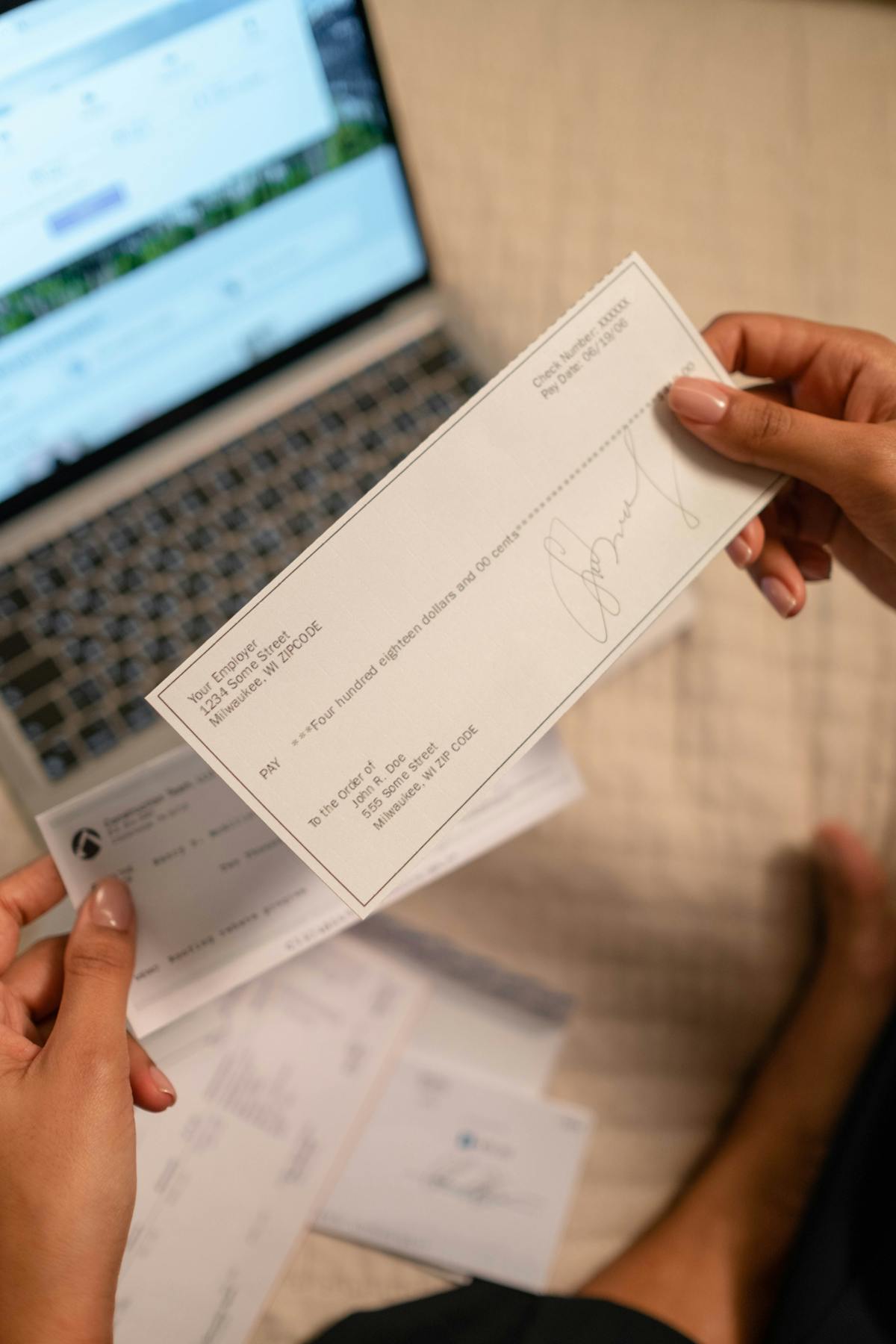
7. Payment method ACH transfer, check (include check number if relevant), cash, credit card (last 4 digits), PayPal, etc.
8. Description of services What the payment is for. Can be a brief description or a reference to the original invoice: “Payment for Invoice #2026-047 — brand identity design, May 2026.”
9. Balance remaining If paid in full: “Balance remaining: $0.00 — PAID IN FULL.” If partial payment: “Balance remaining: $[X]. Invoice #[X] remains open.”
A complete sample invoice receipt
RECEIPT
Issued by: Alex Reyes Creative [email protected] | (555) 288-4019 Austin, TX 78701
Issued to: Northgate Media Group Attn: Accounts Payable / Dana Sullivan
| Receipt Number: | REC-2026-047 |
| Payment Date: | May 30, 2026 |
| Payment Method: | ACH Bank Transfer |
| Amount Received: | $3,500.00 |
For: Full payment of Invoice #2026-047 — UX design and prototyping, May 2026
Invoice Total: $3,500.00 Amount Paid: $3,500.00 Balance Remaining: $0.00
PAID IN FULL
Thank you for your payment. Please retain this receipt for your records.
Alex Reyes Creative
Mark every cash payment with a receipt, even for small amounts. Cash transactions are the only ones with no electronic trail — the receipt is the only documentation that payment was made, for both you and the client.
Writing a receipt for a partial payment
When a client pays a portion of the invoice:
Amount Received: $1,500.00 For: Partial payment of Invoice #2026-052 — website redesign project Invoice Total: $4,000.00 Amount Paid to Date: $1,500.00 Balance Remaining: $2,500.00 (due June 30, 2026)
Keep the original invoice open and send a separate receipt for each partial payment. This prevents confusion about what’s been paid and what remains outstanding.
Using a paid invoice as a receipt
For most B2B freelance work, you don’t need to create a separate receipt document. Instead, mark your invoice as paid:
- Open the original invoice
- Add “PAID” in large, clear text (or use your invoicing software’s paid stamp)
- Note: Date Received: [date], Method: [ACH/check/card], Amount: $[X]
- Save or re-export the document as PDF
- Send the updated paid invoice to the client if they need documentation
Most accounting systems accept this as both a billing record and a payment confirmation.
When to issue a standalone receipt vs. using the paid invoice
Use a standalone receipt when:
- Payment is in cash
- The client’s system requires a post-payment document separate from the invoice
- There’s a partial payment that needs its own documentation
- The client is submitting for expense reimbursement
Use the paid invoice as a receipt when:
- Payment was electronic (bank transfer, card, PayPal)
- The client’s accounting accepts paid invoices
- You want to keep documentation in one document
Storing receipts in your records
Keep receipts alongside their corresponding invoices. A clean filing system:
/Clients/[Client Name]/Billing/2026/
- Invoice-2026-047.pdf
- Receipt-2026-047.pdf
For electronic payments, save the bank confirmation or payment platform transaction export alongside the invoice and receipt. If a payment dispute ever arises, having all three documents in one place is invaluable.
An invoice receipt takes five minutes to write and creates a complete paper trail for every transaction. For cash payments, it’s essential. For all other payments, it’s a professional courtesy that clients with careful bookkeeping will appreciate.
Ready to send stronger proposals?
Build, send, and track proposals in one place so follow-up is easier.
Start your free trial →